
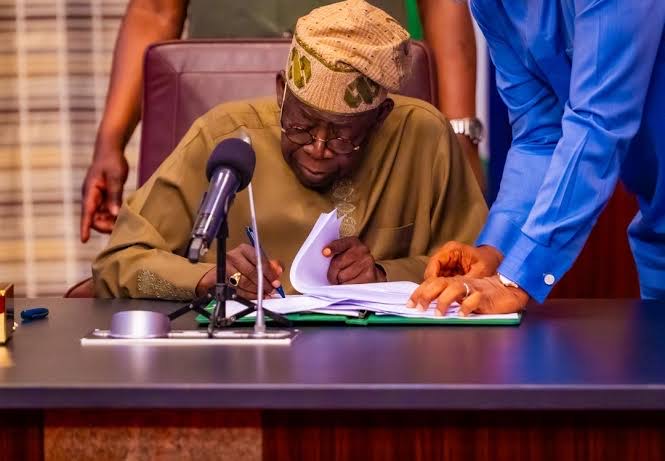
President Bola Tinubu recently ushered in a new era for Nigeria’s fiscal landscape by signing four pivotal tax bills into law. These reforms are hailed as essential to the success of his administration’s economic agenda and crucial for the nation’s long-term prosperity.
A Harmonized and Efficient Tax System
The new legislation aims to streamline and modernize Nigeria’s tax system, which has long been characterized by fragmentation and inefficiency. The four bills signed by President Tinubu are:
- Nigeria Tax Bill (Ease of Doing Business): This bill is designed to consolidate Nigeria’s various tax laws into a single, cohesive statute, making it easier for businesses and individuals to understand and comply with tax regulations.
- Nigeria Tax Administration Bill: This legislation establishes a uniform legal and operational framework for tax administration across all levels of government—federal, state, and local—promoting consistency and efficiency.
- Nigeria Revenue Service (Establishment) Bill: This critical bill repeals the existing Federal Inland Revenue Service (FIRS) Act and replaces it with a more autonomous and performance-driven national revenue agency, the Nigeria Revenue Service (NRS). This move is expected to enhance revenue collection capabilities.
- Joint Revenue Board (Establishment) Bill: This bill provides a formal governance structure to foster greater cooperation and coordination among revenue authorities at all levels of government, ensuring a more integrated approach to revenue generation.
A New Lease of Life for Nigerians
During the signing ceremony at the State House, President Tinubu emphasized the transformative potential of these new laws, stating that they offer “a new lease of life to every Nigerian and future generation.” He highlighted the administration’s commitment to guiding the nation towards economic growth.
“What we did a few minutes ago is the way forward for our country’s prosperity,” President Tinubu affirmed. “Leadership must help people take off, lead the way, and navigate every turn and twist.11 We must help them reach their destination. That is what we are doing.”
He further underscored Nigeria’s renewed commitment to business and investment, declaring, “We are in transit; we have changed the roads, we have changed some of the misgivings, we have opened the doors to a new economy, business opportunities. We have shown the world that Nigeria is ready and open for business.”
Commendation for Collaborative Efforts
President Tinubu also extended his appreciation to the leadership and members of the National Assembly for their role in passing the bills, despite initial challenges. He acknowledged that “nowhere in the world would tax reforms be easy,” commending their courage in the face of disputes.
Mr. Taiwo Oyedele, Chairman of the Presidential Committee on Fiscal Policy and Tax Reforms, praised President Tinubu’s leadership, noting the President’s unwavering support without micromanaging the committee. He stated, “History will remember you for good for transforming our country because you went for a fundamental reform.”
Dr. Zacch Adedeji, Chairman of the Federal Inland Revenue Service, expressed his profound joy, describing the passage of the bills as a “dream come true.” Similarly, the President of the Senate, Godswill Akpabio, lauded President Tinubu’s “sterling leadership qualities,” emphasizing his intellectual prowess and dedication to national progress. Akpabio believes these laws will benefit generations to come, a testament to the President’s commitment to the “change for the country” agenda he campaigned on.
The collaborative efforts of the National Assembly and various stakeholders were instrumental in bringing these significant tax reforms to fruition, setting Nigeria on a path toward a more stable and prosperous economic future.


Add Comment