
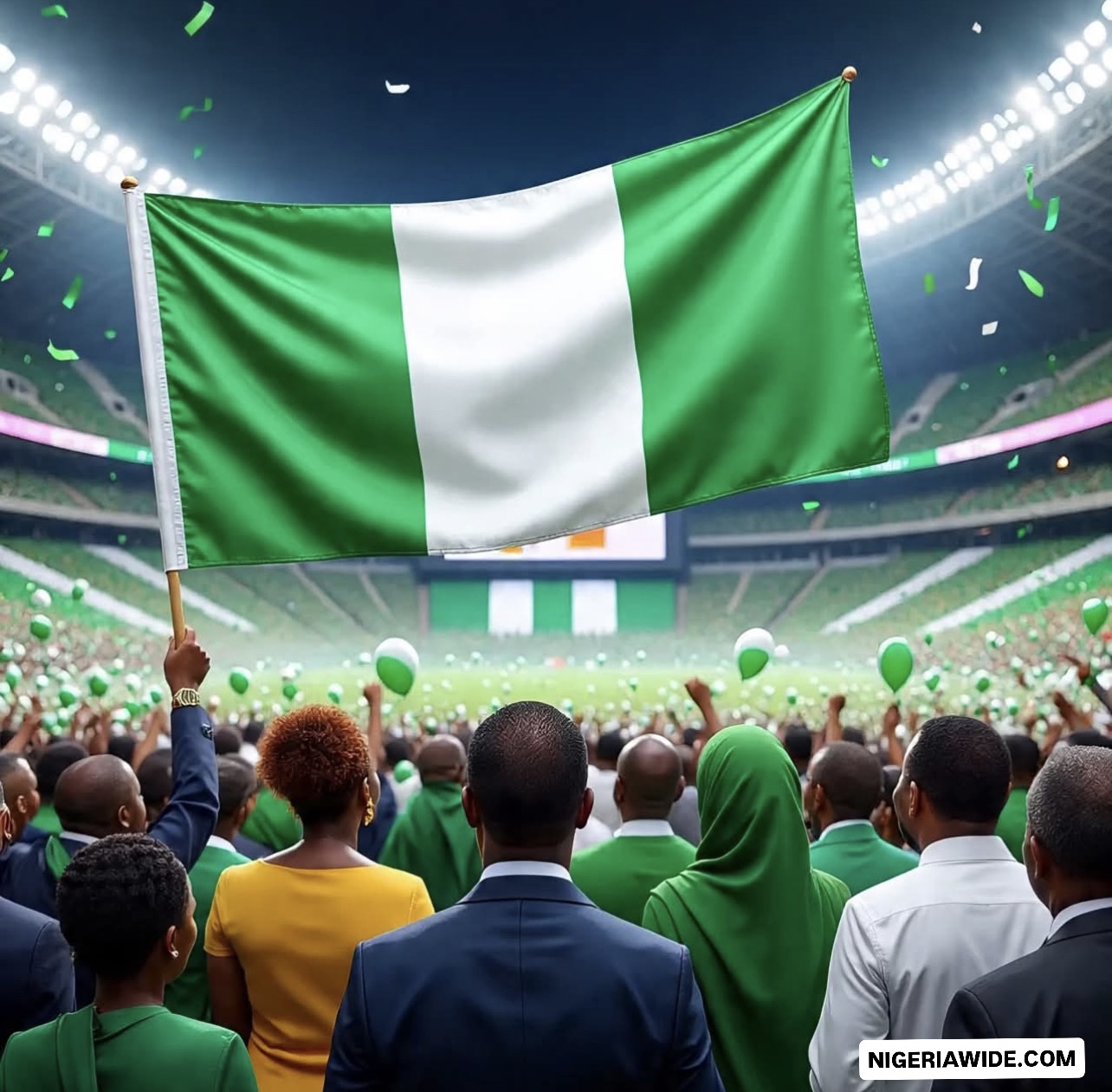
Today, October 1, 2025, marks the 65th anniversary of Nigeria’s independence—a milestone not just of time, but of an enduring journey. It is a day to look back with gratitude at the sacrifices made, forward with faith in our potential, and inward at the resilient spirit that binds over 230 million people together.
Nigeria’s story is not defined by its challenges, but by its spectacular ability to overcome them. It is a vibrant tapestry woven from the threads of over 250 ethnic groups, bound by a shared, often turbulent, but ultimately hopeful destiny.
The Foundation Builders: An Enduring Legacy (1960s – 2000s)
Our nation’s development is a multi-generational project, with each government laying a critical stone. The early years after 1960 were characterized by ambitious nation-building across key sectors:
1. Pioneering Education for Mass Literacy
The expansion of education immediately post-independence was driven by visionary regional leaders who prioritized human capital.
- Chief Obafemi Awolowo is celebrated as the architect of the Free Primary Education policy in the Western Region, a foundational initiative that created one of Africa’s most educated populations and led to the establishment of institutions like the University of Ife (now Obafemi Awolowo University).
- Dr. Nnamdi Azikiwe championed the establishment of the University of Nigeria, Nsukka (UNN).
- Sir Ahmadu Bello spearheaded educational development in the North, leading to the creation of Ahmadu Bello University (ABU), Zaria.
Today, we boast over 690 tertiary institutions—a colossal leap from the mere handful at independence—a direct legacy of these educational pioneers.
2. Iconic Infrastructure for Connectivity
Successive administrations recognized that roads, power, and industry were the lifelines of a modern nation.
- Major power projects like the Kainji Dam (completed in 1968) laid the groundwork for industrialization.
- The administration of President Shehu Shagari (1979-1983) commissioned the massive Ajaokuta Steel Mill, intended to be the bedrock of Nigeria’s industrial growth, and also launched the Green Revolution program to boost agriculture. Importantly, the Shagari administration inaugurated the first phase of the Third Mainland Bridge in 1980, setting the stage for its final completion by General Ibrahim Babangida in 1990. The bridge stands as a testament to phased, long-term national projects.
- As Minister of Works (1965-1966), Shagari also played a key role in the execution of other landmark projects like the Eko Bridge in Lagos.
3. A Diplomatic Powerhouse
Nigeria emerged as a leading voice for Africa, pioneering the formation of ECOWAS and playing a decisive role as a ‘frontline state’ against the apartheid regime in South Africa—cementing its place as the continent’s diplomatic powerhouse.
The Digital and Infrastructure Surge (2000s – Present)
The return to democratic rule ushered in an era of reform and digital revolution. The major development milestones of the 21st century have been transformative:
- Telecommunications Revolution: The privatization and liberalization of the telecoms sector beginning in the early 2000s connected millions of Nigerians, laying the digital infrastructure that fuels today’s booming FinTech and tech start-up ecosystems.
- Modern Rail Renaissance: Recent administrations initiated the construction and completion of modern Standard Gauge rail lines, notably the Abuja-Kaduna Railway and progress on critical linkages like the Kano-Kastina-Maradi line, finally modernizing a transport network inherited from the colonial era.
The Dawn of the Renewed Hope Era
Under President Bola Ahmed Tinubu, Nigeria is tackling decades-long structural issues with unprecedented courage. The core message of the 65th anniversary is a declaration that the nation has truly “turned the corner” towards recovery:
1. Accelerated Infrastructure & Economic Reset
- Fiscal Stability: The bold, necessary reforms, including the removal of the fuel subsidy, have already yielded positive results. The national Debt Service-to-Revenue Ratio has been significantly reduced, freeing up trillions of Naira for targeted investment.
- Massive Road & Rail Projects: The administration is driving the accelerated construction of major arteries across Nigeria. Key projects include the ambitious Lagos-Calabar Coastal Highway, the ongoing completion of the Kaduna-Kano Rail Line, and critical regional roads like the Sokoto-Badagry Highway.
- Energy Sector Growth: The sector has seen a rebound in oil production due to improved security and the first domestic refining of PMS in decades, contributing to greater energy stability and regional fuel price reduction.
- Water Resources Development: Major federal projects are being reactivated, focusing on irrigation and dam projects across states like the ongoing work at the Kashimbilla Multipurpose Dam in Taraba and the Zungeru Hydroelectric Power Project in Niger State, to boost power generation and agricultural output.
2. Empowering the Next Generation
- Education Funding: The administration established the Nigerian Education Loan Fund (NELFUND), which has already disbursed substantial funds to thousands of students, ensuring that no Nigerian is denied higher education due to poverty.
- Economic Diversification: There has been a record-breaking surge in non-oil revenue, with the non-oil sector, including agriculture and technology, now leading the nation’s GDP growth.
A Call to Action for Patriotism and National Unity
Fellow Nigerians, 65 years is a lifetime for an individual, but for a nation, it is merely the dawn. We celebrate the tenacity and sheer will that have seen us through civil strife, economic shocks, and political turbulence. We are a nation that does not break; we bend, we reform, and we rise again.
We must commit to productivity over dependency. The call is clear: Let us be a nation of producers, not just consumers. Let us farm our lands, build our factories, support our local entrepreneurs, and pay our taxes with pride. Let us put Nigeria first in every decision we make.
We must choose unity over division. The great promise of Nigeria lies in its diversity—the energy of the North, the enterprise of the West, the intellect of the East, and the resourcefulness of the South-South. Embrace your neighbor, regardless of tongue or tribe, for the strength of the rope lies in the number of its strands.
As we mark this 65th Independence Day, let us shed the old cynicism. Let us pick up the mantle of shared responsibility. Believe, once more, in the boundless potential of our great nation. The time for spectatorship is over.
Go forth, let all hands be on deck, and let us build the Nigeria of our dreams, together, in unwavering patriotic unity! God Bless the Federal Republic of Nigeria.

Add Comment