
- October 1, 2026
- 8
- Culture
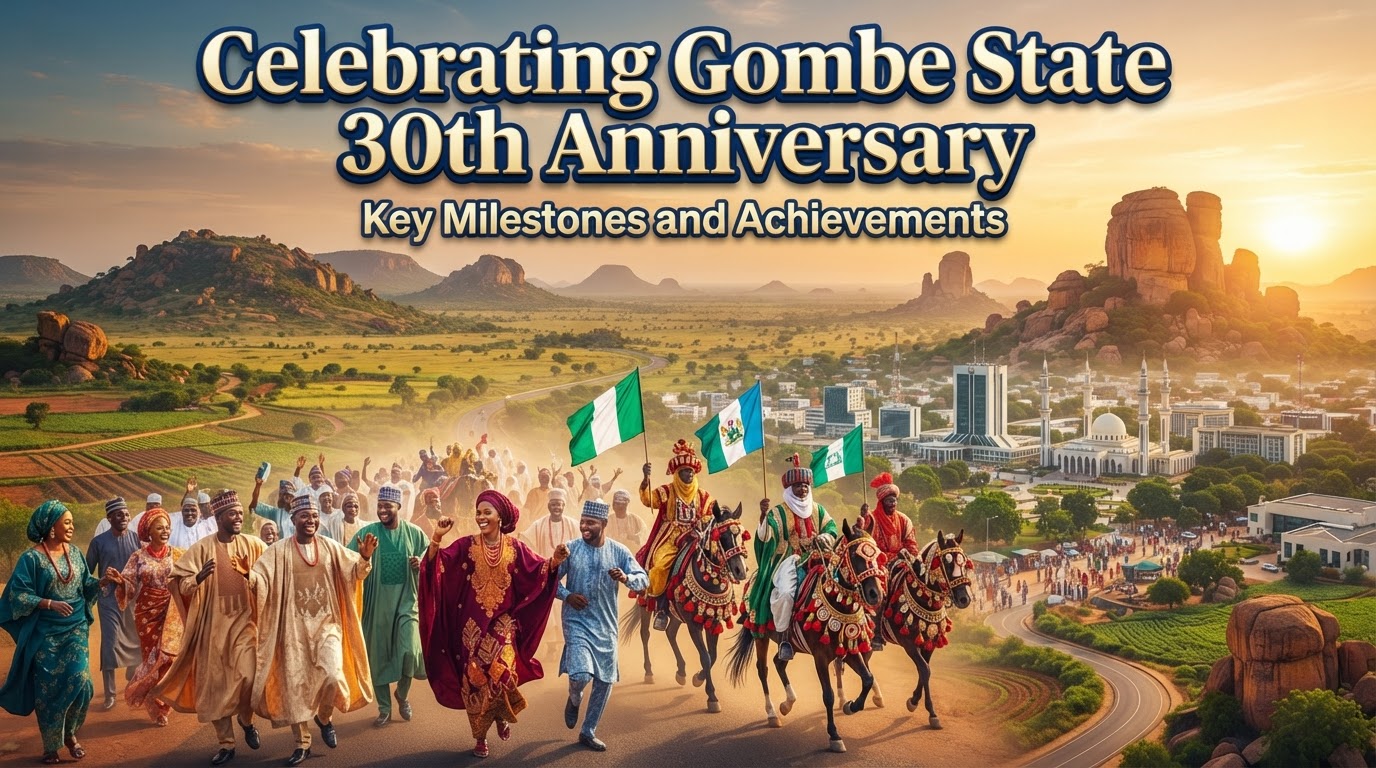
Gombe city wakes up to the sound of honking tricycles and bustling market traders this October 1st. In 1996, Gombe was a sleepy railway town. Today, it is an economic powerhouse in the Northeast. Carved out of old Bauchi State on October 1, 1996, by General Sani Abacha, the state has spent thirty years proving that vision matters more than size.
The collective joy of citizens celebrating today echoes the fierce determination of the elders who lobbied for self-governance three decades ago.
The Jewel in the Savannah
How did an interior savannah state become known as the Jewel in the Savannah?
By refusing to let regional turmoil define its borders. While neighboring territories faced severe security backdrops, Gombe carved out a reputation as an oasis of peace, commercial vibrancy, and rapid urban planning. Orderly streets, functional streetlights, and a thriving commercial core made the state capital a magnet for traders across Adamawa, Yobe, Borno, and Bauchi.
The Infrastructure Leap
Physical transformation tells the true story of these thirty years.
Gombe State University (GSU) and the Federal University, Kashere, opened doors of higher learning to thousands, ending generations of educational disadvantage. The construction of the Gombe Lawanti International Airport opened the airspace for business travelers. Meanwhile, the massive Dadin Kowa Dam became a multi-purpose lifeline, providing hydroelectric power for homes and water for massive agricultural irrigation schemes that turn dry earth into green gold.
An Oasis of Peace and Business
You cannot talk about economic ease in Nigeria without mentioning Gombe. It consistently ranks near the top of the national “Ease of Doing Business” index.
Red tape is slashed. Bureaucracy is minimized. This pro-business climate fueled agricultural dominance, particularly through massive grain markets like the famous Gombe main market, which supplies maize, sorghum, and beans across West Africa. Merchants know their investments are secure here, creating a virtuous cycle of wealth creation.
Culture, Diversity, and Unity
Social harmony is the state’s secret weapon. The Fulani, Tangale, Tera, Waja, Bolewa, and Kanuri live side by side, sharing traditions, marriages, and markets.
The historic Emir of Gombe’s palace stands as an architectural and cultural anchor, symbolizing traditional authority that respects diversity. Annual cultural festivals display traditional wrestling, music, and colorful horse parades that remind the younger generation of their deep indigenous roots.
Shaping the Next 30 Years
Under Governor Muhammadu Inuwa Yahaya, the state is aggressively pursuing industrialization. The Muhammadu Buhari Industrial Park is rising to position Gombe as the premier manufacturing hub of the Northeast. Solar energy projects, healthcare overhauls, and robust human capital development initiatives ensure that the next thirty years will be defined by technological and industrial self-reliance.
Conclusion
The Jewel in the Savannah shines brighter today than it did in 1996. Through grit, smart governance, and peaceful coexistence, Gombe has proven that progress is an intentional choice. May the lights of the Jewel never dim.
Want to trace the 30-year political and economic evolution of the state? Click here to learn more about its history. Or, if you are planning a trip and looking for local adventures, click here to discover the best of the state.

Add Comment