
- October 1, 2026
- 10
- Culture
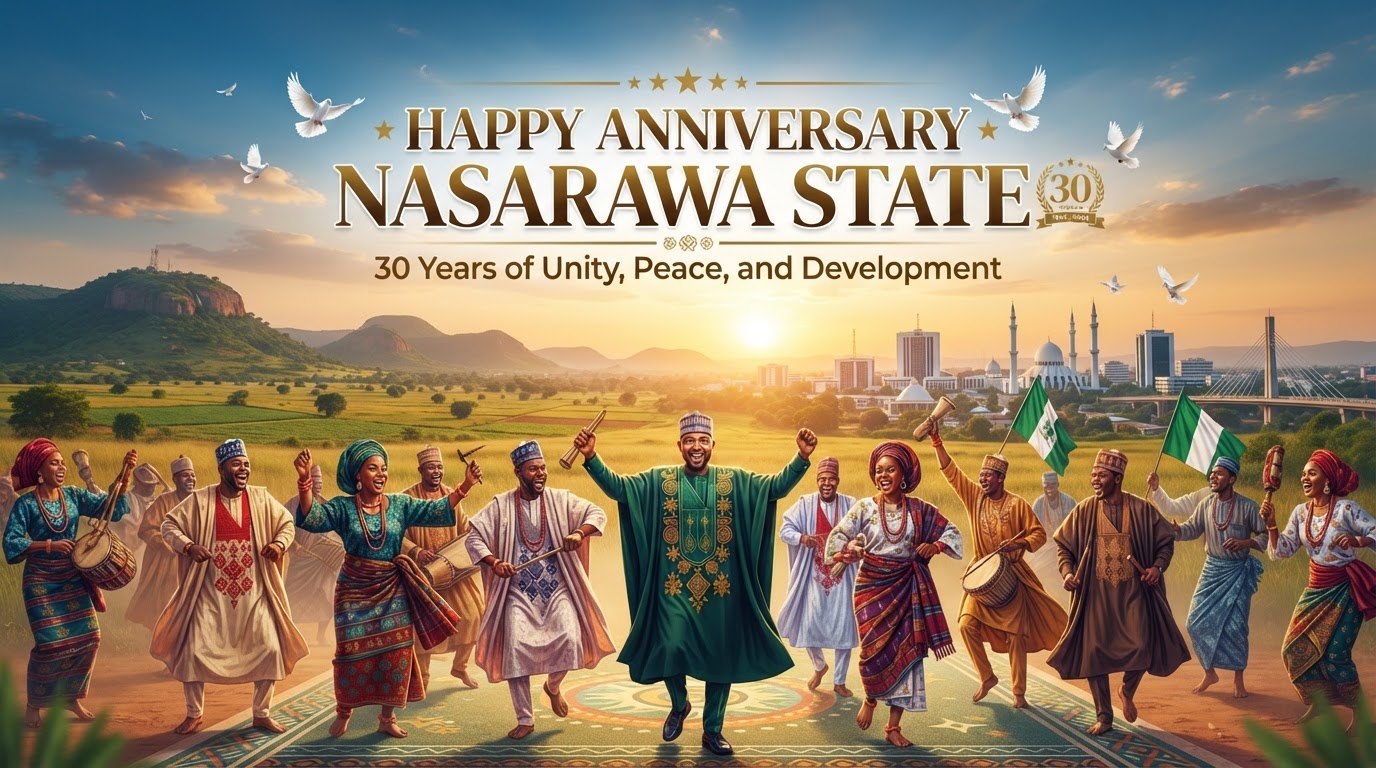
The morning air in Lafia carries a distinct electric charge this October 1st. In 1996, the capital was an administrative afterthought. Today, it anchors a powerhouse region. While Nigeria marks sixty-six years of national sovereignty, Nasarawa State celebrates its own landmark 30th anniversary, born from the old Plateau State on October 1, 1996, courtesy of General Sani Abacha.
Three decades of self-determination have turned a mosaic of diverse ethnic groups into a cohesive, forward-looking sub-national giant.
The Home of Solid Minerals
Ask any investor where the next industrial frontier lies, and they will point straight to the Home of Solid Minerals.
The state is an absolute geological wonderland. Beneath the rugged terrain of Awe, Nasarawa Eggon, and Keffi lies a fortune in raw resources. Vast, untapped deposits of lithium, barite, marble, coal, and precious gemstones line the earth. While oil commands the southern coastal swamps, solid minerals command the northern and central horizons. Extracting and processing these resources locally is changing the economic narrative from mere artisanal digging to structured industrial mining.
The Strategic Gateway to Abuja
Proximity is power. Sharing a direct border with the Federal Capital Territory (FCT) turned Nasarawa into Abuja’s natural pressure valve.
Look at Karu, Mararaba, and Nyanya. They transformed from sleepy outposts into massive, bustling economic extensions of the capital city. Millions of workers commute across the border daily, turning towns like Masaka into vibrant commercial hubs. This strategic positioning makes the state an indispensable logistics and residential corridor for the entire central zone of Nigeria.
Key Milestones over Three Decades
Growth requires structural pillars. Over thirty years, the state built its own intellectual and physical backbone.
The Nasarawa State University, Keffi (NSUK) stands tall as a premier citadel of learning, churning out graduates who drive sectors across Nigeria. Physical infrastructure received a massive boost with projects like the Lafia Cargo Airport, designed to link local agricultural and mineral goods directly to international markets. Agricultural outgrower schemes, the Tungan Kawo irrigation dam, and large-scale rice milling factories ensure that the state feeds itself and the capital city next door.
Cultural Harmony in a Diverse Land
Diversity usually sparks friction. In Nasarawa, it sparks harmony.
How do the Eggon, Alago, Gwandara, Migili, Tiv, and dozens of other indigenous groups coexist so peacefully? Respect. Traditional rulers maintain a delicate, effective peace that makes the state a rare sanctuary of stability in a volatile region. Traditional festivals, colorful attire, and shared community markets prove that plurality can be a source of immense strength rather than division.
Mapping the Future
Under Governor Abdullahi Sule, the focus has shifted sharply toward industrial execution. Clean lithium processing plants are rising to capture global green-energy supply chains. Internal revenue generation is being digitized, reducing reliance on federal allocations. The push for modern technology and vocational training means young people are no longer just looking for jobs; they are being equipped to create them.
Conclusion
Thirty years is merely a blink in the lifetime of a region, yet Nasarawa has packed centuries of evolution into three decades. Unity remains its anchor, peace its currency, and development its destination. The journey has only just begun.
Want to trace the 30-year political and economic evolution of the state? Click here to learn more about its history. Or, if you are planning a trip and looking for local adventures, click here to discover the best of nasarawa state.

Add Comment