
- August 17, 2026
- 76
- Business
Let’s be honest. Nigerian culture is no longer knocking on the world’s door. It has kicked the door wide open, walked in, and rearranged the furniture.
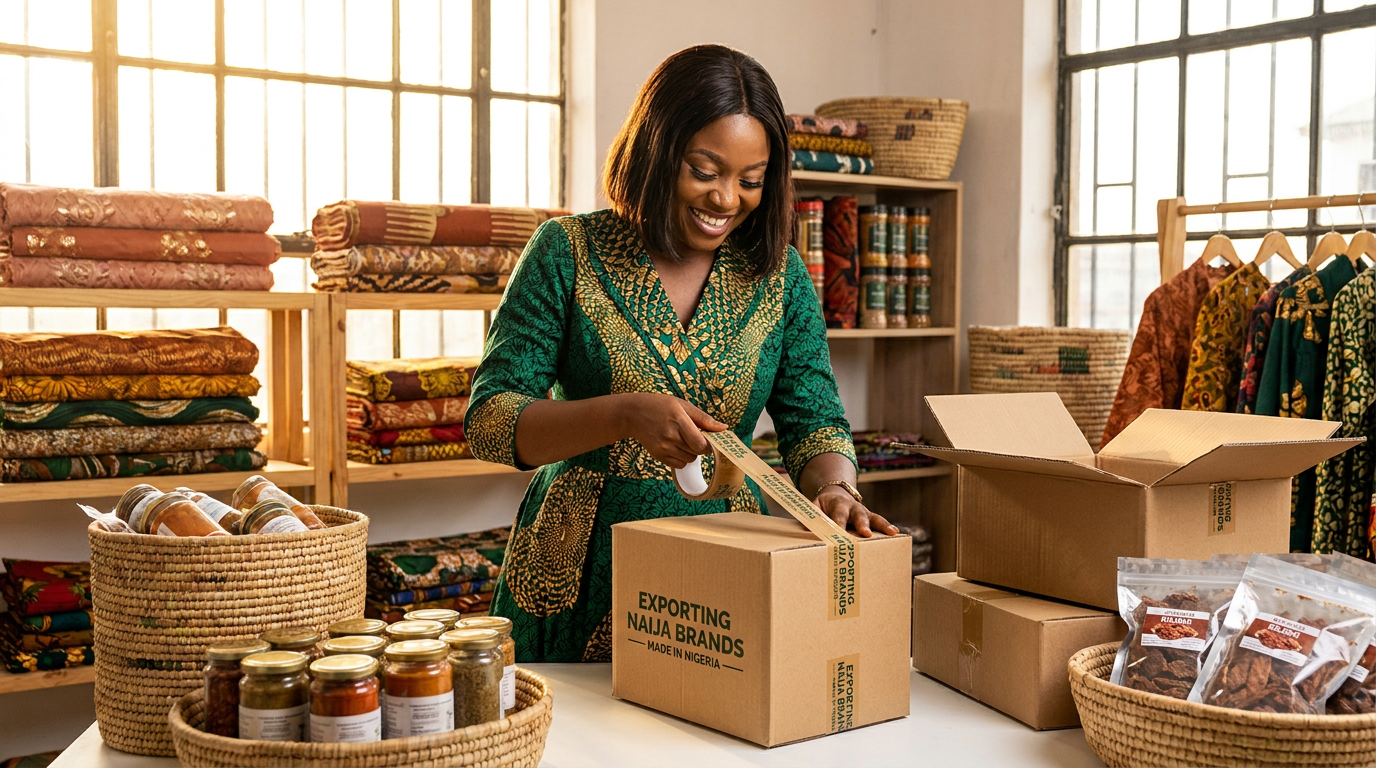
Burna Boy is filling stadiums in London. Wizkid features are the golden ticket on any global track. Nollywood is sitting comfortably on Netflix home screens from Toronto to Tokyo. And somewhere in the middle of all this Afrobeats and Nollywood magic, a quieter revolution is brewing — one that smells like jollof rice and looks like a perfectly tailored Ankara blazer.
We believe fashion and food are the next big frontier for Naija exports. The world has fallen in love with our sound and our stories. Now it’s time they fall in love with our taste and our style too. Think about it — every diaspora Nigerian craving suya in Houston, every fashion editor in Milan hunting for the “next big print,” every foodie in London who just discovered kilishi on TikTok. That’s a market. A real, hungry, paying market.
This guide is for the vendor in Ariaria who dreams beyond Aba. The tailor in Yaba whose Ankara designs deserve a Paris runway. The food processor in Kano turning cassava into gold. And honestly, this guide is just as much for the Nigerian diaspora in the US, UK, and Canada searching for authentic Nigerian food online, or hunting for real Nigerian fashion brands abroad instead of settling for cheap knock-offs. If you’ve ever wondered how to take your “small small” hustle and turn it into an international brand — or you’re abroad and tired of asking “where can I buy Nigerian food near me?” — keep reading.
Why Now? The Culture Has Already Done the Marketing For You
Here’s the real truth — you don’t need to convince the world that Nigeria is cool anymore. Afrobeats did that job for free. Nollywood did that job for free. All you need to do now is show up with a product that matches the hype.
Global consumers are curious. They’ve heard “Naija” in a song lyric, seen it in a movie caption, maybe even danced to it at a wedding. That curiosity is your opening. Your job is to convert curiosity into a customer who clicks “Add to Cart.”
But — and this is important — curiosity alone won’t sustain a business. You need systems. You need compliance. You need packaging that doesn’t scream “roadside stall” when it’s competing on a shelf next to a Whole Foods brand. This is where most vendors stumble, so let’s break it down frontier by frontier.
The Food Frontier: Beautiful, Delicious, and Heavily Regulated
Food is emotional. It’s nostalgia in a pot. It’s the thing that makes a Nigerian abroad cry a little when they finally find real ogbono soup mix in a foreign supermarket, or stumble on a store selling authentic Nigerian food in the UK after months of searching. That emotional pull is powerful — and it’s exactly why demand for Nigerian food delivery in the US, UK, Canada, and across Europe keeps climbing. But food is also the most heavily regulated export category, full stop.
The Hurdles You Must Clear
NAFDAC first, always. Before your kilishi, packaged jollof mix, or ground spices leave Nigerian soil, NAFDAC registration and export certification aren’t optional extras — they’re your foundation. Without them, customs will stop your goods before they even see the ocean.
Then the destination country’s own gatekeepers. If you’re eyeing the US market, the FDA has its own maze — facility registration, prior notice for food shipments, and strict labeling rules (nutritional facts, allergen declarations, the works). The EU is arguably stricter still, with agricultural import laws that scrutinize everything from pesticide residue to how your cassava was processed.
Don’t forget NDLEA clearance for certain export categories. Some spice blends and herbal products can raise red flags at customs simply because of how they’re packaged or labeled, so proper documentation upfront saves you a world of stress at the port.
How to Beat the System (Legally, Of Course)
- Work with a NAFDAC-accredited lab early — don’t wait until shipment day to discover a compliance gap
- Invest in proper shelf-stable packaging; vacuum-sealed kilishi lasts longer and looks premium
- Get your labels translated and formatted to match destination-country standards (grams AND ounces, ingredient lists in English and, where useful, the local language)
- Partner with a customs clearing agent who has actually exported food before — not just anybody with an office in Apapa
- Consider third-party certifications (Halal, Organic, HACCP) — they build instant trust with buyers who’ve never tasted your product before
A quick example: Picture a small processor in Kaduna who used to sell dried tomato powder only at local markets. She got her NAFDAC export certificate sorted, repackaged her product in resealable pouches with bilingual labels, and started selling through a diaspora-focused online store offering Nigerian groceries online in the USA. Within a year, she had repeat customers in Atlanta, Houston, and Toronto who were ordering monthly, and her kilishi and spice blends became a go-to source for buy Nigerian spices online searches. Nothing changed about the product’s quality — what changed was the paperwork and the packaging.
The Fashion Frontier: Positioning Naija as Premium, Not Souvenir
Here’s where a lot of Nigerian fashion loses money without even realizing it. Ankara gets treated like a “cute African print” souvenir instead of what it actually is — a serious design statement that deserves serious pricing. Search interest for terms like buy Ankara online USA, Nigerian fashion brands UK, and premium African fashion Canada is only growing, and diaspora Nigerians are actively looking for sellers they can trust.
You need to shift the story. Aso-oke isn’t just “traditional attire.” It’s handwoven heritage textile — the kind of craftsmanship that luxury houses in Europe would kill to have in their supply chain. Contemporary Nigerian streetwear isn’t “African fashion.” It’s just fashion, made by designers who happen to be Nigerian, and it deserves to sit on the same rack as any global label.
Making the Premium Shift
- Photograph and market your pieces the way luxury brands do — clean backgrounds, editorial styling, real storytelling about the fabric’s origin and the artisan behind it
- Price for value, not for guilt. Undercutting yourself to “make it affordable” only cheapens the whole category
- Build a brand narrative. Why does this print matter? Who wove this fabric? Buyers abroad pay for stories as much as they pay for stitching
The Practical Stuff Nobody Talks About Enough
Sizing will make or break your international sales. A Nigerian “Large” is often a US “Medium” or even “Small.” You need to convert every single garment to US and UK sizing charts, clearly, on every product listing. Nothing kills a sale faster than a customer receiving a dress that doesn’t fit and never ordering again.
Shipping logistics for fashion also differ from food. Garments need proper folding or hanging shipment methods, moisture protection (especially for anything handwoven or beaded), and realistic delivery timelines communicated upfront — international buyers are patient about handmade goods, but only if you’re honest about how long it’ll take.
Another quick scenario: A young designer in Lagos was selling Ankara jumpsuits for ₦15,000 locally, mostly through WhatsApp status. She rebranded, created a lookbook with proper editorial photography, added US/UK size conversion charts to every listing, and repositioned her prices to reflect the actual labor involved. She now ships to the UK and Canada at nearly triple her old price point, ranks well for shoppers searching for Nigerian designer clothing online, and customers keep coming back, because the story and the fit both landed right.
The Digital Storefront: Trust Is Your Currency Abroad
You can have the best kilishi or the most gorgeous Aso-oke gown in Nigeria, but if your online presence looks shaky, international buyers will scroll right past you. Trust is everything when someone is sending money to a business they’ve never physically visited — especially diaspora shoppers Googling “shop Nigerian products online” or “order Nigerian food online” from places like London, New York, Houston, and Toronto.
Build These Foundations
- A proper Shopify (or similar) store — not just an Instagram page. It signals legitimacy and gives you analytics, inventory tracking, and a professional checkout experience
- Instagram and TikTok Shopping — because that’s where the discovery happens, even if the actual purchase moves elsewhere
- Secure international payment gateways — Paystack, Flutterwave, and Stripe integrations that let a customer in Berlin pay without fear
- Reviews and testimonials, visibly displayed — nothing builds trust like seeing “verified buyer, London” underneath a five-star review
- Clear return and refund policies — international buyers check for this before they check the price
Your digital storefront is your international shopfront. Treat it with the same seriousness you’d give a physical boutique on Bond Street.
Logistics & Collaboration: Your Quick Checklist
Getting the product made is half the battle. Getting it there, intact and on time, is the other half.
Shipping partners to evaluate:
- DHL Express — reliable for smaller, time-sensitive parcels
- FedEx International — good for businesses scaling into regular shipment volumes
- Freight/cargo services — cost-effective for bulk orders, though slower; worth it once you’re shipping wholesale
Leverage the diaspora, seriously:
- Nigerians abroad are your first customers, your loudest cheerleaders, and often your best local distributors — especially in top diaspora hubs like the US, UK, Canada, and Germany
- Partner with diaspora-run African grocery stores and boutiques for consignment or wholesale deals, tapping into the growing demand for Nigerian food stores in the UK and Nigerian grocery delivery in the USA
- Tap diaspora WhatsApp and Facebook community groups — they move product faster than any paid ad
- Consider diaspora “brand ambassadors” who get free product in exchange for honest reviews and word-of-mouth
- Optimize your product listings for searches like “authentic Nigerian food abroad,” “Nigerian food delivery near me,” and “buy Nigerian fashion online” — these are exactly the phrases homesick Nigerians in tier 1 and tier 2 countries are typing into Google
The Bottom Line
The world already loves what Naija sounds like and what Naija looks like on screen. Now it’s your turn to make sure the world knows what Naija tastes like and what Naija truly wears. The compliance paperwork can feel tedious, yes. The sizing charts, the labeling rules, the customs forms — none of it is glamorous. But every big global brand you admire today started with someone doing exactly this unglamorous groundwork.
Your hustle deserves shelf space next to the best in the world. Go and take it.
Ready to Take Your Brand Global?
You’ve got the product. You’ve got the passion. Maybe what’s missing is just that first push.
So here’s our question for you: what’s stopping you from listing that first product internationally this month? Not next year. Not “when things settle.” This month.
Drop a comment and tell us what you’re exporting — kilishi, Ankara, Aso-oke, spice blends, we want to hear it. Better still, share this guide with that one friend who’s been sitting on a brilliant fashion or food idea, too scared to take it beyond the local market. Sometimes all a hustle needs is one person saying “you can do this.”
The world is already vibing to our music. Let’s make sure they’re wearing our fabric and eating our food too. Naija to the world — one export at a time.


Add Comment