
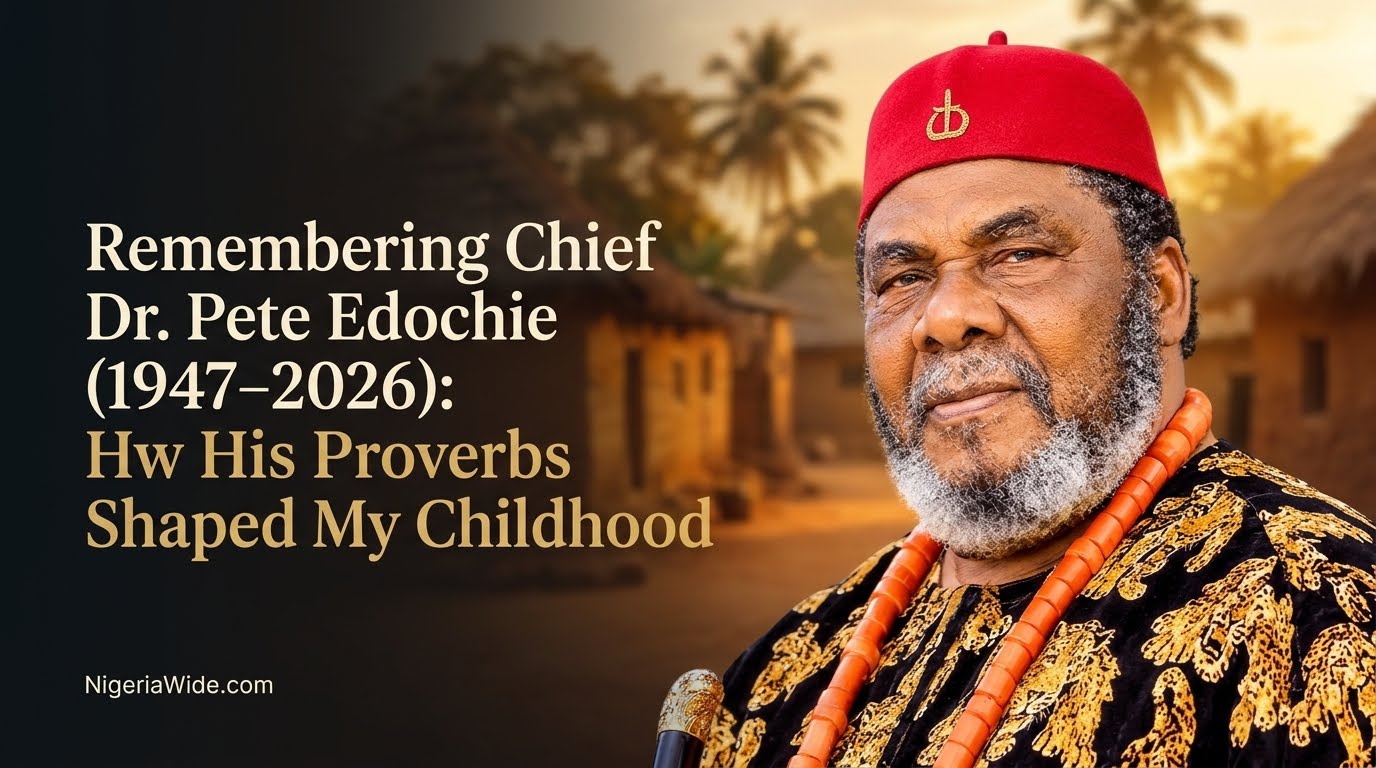
Remembering Chief Dr. Pete Edochie (1947–2026): How His Proverbs Shaped My Childhood

- November 26, 2026
- 15
- Opinion
Remembering Chief Dr. Pete Edochie (1947–2026): How His Proverbs Shaped My Childhood
Waking up to the news of Chief Dr. Pete Edochie’s passing in Enugu at the age of 79 felt like losing a familiar voice that had lived inside our home for decades. For millions of Nigerians and Africans across the diaspora, he was a towering screen legend, a master broadcaster, and the undisputed patriarch of Nollywood. Yet, before I ever understood the business of media, journalism, or cinema, he was simply the elder on our living-room television whose words made me stop and think.
When a cultural icon passes, a nation often searches for the exact words to measure what was lost. With Pete Edochie, words themselves feel almost inadequate—because so much of his life’s work was built on showing us how to use language with weight, wit, and moral authority.
The Classroom in the Living Room
Growing up, watching him on screen felt less like passive entertainment and more like sitting at the feet of a wise village chief. Long before I grasped the complexities of adulthood, that unmistakable, thunderous baritone would echo through the room, immediately commanding attention.
To a child, the world often looks deceptively simple—divided neatly into right and wrong. Pete Edochie’s proverbs changed how I saw things. Through his iconic roles—whether as the formidable Okonkwo in Things Fall Apart, a revered Igwe, or a stern traditional father—he did not merely recite lines; he delivered lessons wrapped in ancestral truth.
I still remember pausing mid-play whenever he leaned forward on screen, adjusted his signature red cap, and began a sentence with, “My son…” or “You see, in our land…” Even when I was too young to immediately unpack every metaphor, his measured pacing forced me to slow down and listen closely.
One saying of his stayed etched in my childhood memory: “No matter how hot your anger is, it cannot cook yam.” To an adult, it is a familiar African idiom. To my younger self, that vivid image was a revelation in the middle of childhood frustrations—a reminder that losing one’s temper solves nothing. He had a rare gift for translating profound moral philosophy into imagery so clear that even a child could carry it for life.
Authority Without Noise
Zooming out from personal memory to broader Nigerian culture, one of Pete Edochie’s greatest lessons was quiet authority. Too often in dramatic storytelling—and in public life—people mistake volume for power, shouting to prove dominance. Edochie understood that genuine authority rarely needs to raise its voice.
His presence carried the gravitas of elders and custodians of custom, yet he never reduced tradition to caricature. Beneath the coral beads and royal regalia was a recognizable human texture: stubbornness, pride, duty, and flashes of dry humor that kept audiences leaning in. That balance is why his reach spanned generations, from classic Nollywood viewers to younger audiences who discovered his expressions through viral digital moments.
Lessons That Outlived the Screen
Looking back today as an editor and observer of society, I see how deeply those early screen moments shaped how I think, write, and read people. His journey—from disciplined broadcasting roots in 1967 to becoming a Member of the Order of the Niger (MON) and an anchor of Nollywood’s rise—showed the power of craft and cultural confidence.
Through his parables and unhurried delivery, he left behind principles that still feel urgent:
Actions carry weight: Every choice leaves a ripple, making accountability essential long before crises hit.
Patience is real strength: Composure and timing often achieve what force and noise cannot.
Culture is a living compass: Indigenous wisdom and proverbs are not relics of the past, but practical tools for navigating modern life.
What His Passing Asks of Us Now
Tributes rightly honor longevity, national recognition, and decades of unforgettable screen history. Yet the deeper test of any tribute is what we do with the inheritance left behind.
Cultural preservation does not happen automatically just because a legend walked among us. It happens when storytellers, broadcasters, writers, and everyday speakers protect depth over noise—when we value nuance, cultural literacy, and original voice over fleeting imitation.
Chief Dr. Pete Edochie may have taken his final bow, leaving an irreplaceable space in African cinema and cultural memory. Yet his influence endures whenever someone pauses to frame a thought carefully, honors heritage without fear, and lets wisdom speak plainly. Rest in peace, Ebubedike.
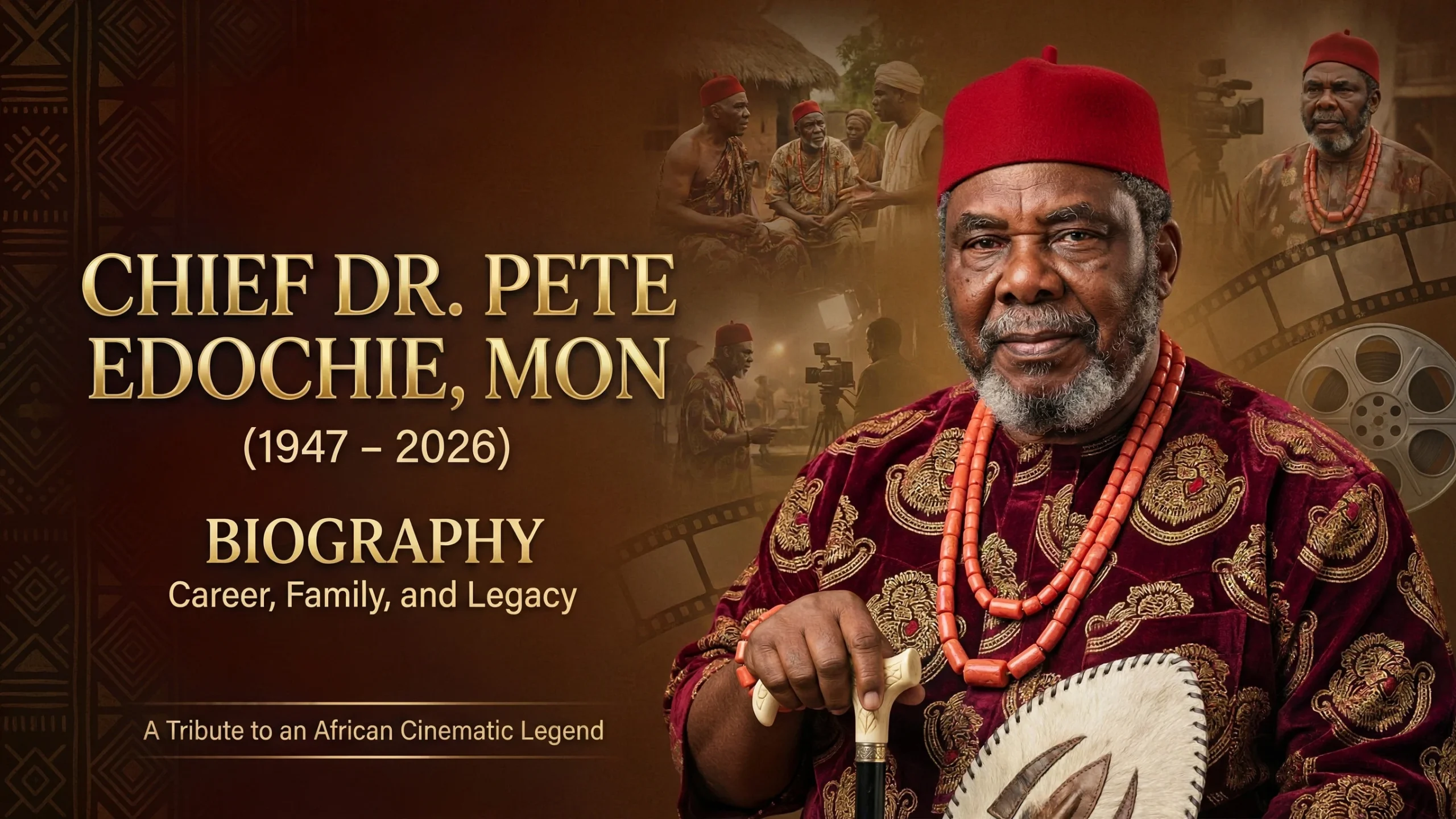
Read Chief Pete Edochie’s full biography on Nigeriawide.com, and share your favorite proverb or screen memory in the comments.

Add Comment