
- November 10, 2026
- 12
- Business
For more than half a century, Nigeria’s economic identity has been inextricably tied to crude oil. As Africa’s largest producer of crude, the nation built a reputation for exporting vast quantities of high-grade, low-sulfur oil while simultaneously relying on foreign refineries to meet its domestic demand for gasoline, diesel, and aviation fuel.
This structural mismatch created a persistent drain on foreign exchange reserves and left domestic fuel pricing vulnerable to global energy market volatility.
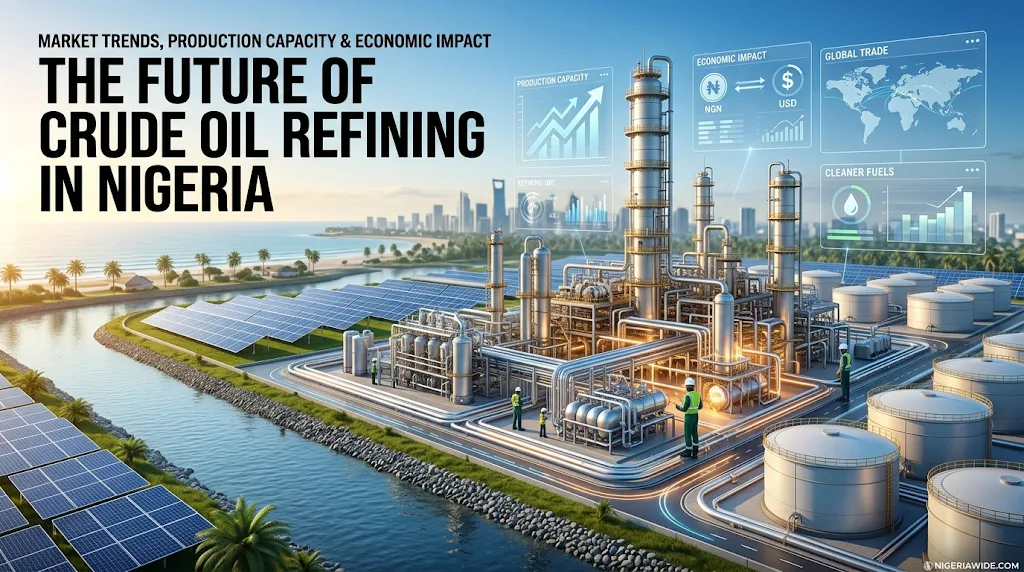
Today, Nigeria stands at the precipice of a historical paradigm shift. Driven by private sector investments, mega-scale infrastructure projects, and the formal implementation of the Petroleum Industry Act, the nation is transitioning from an exporter of raw crude to an operational regional hub for refined petroleum products.
The Shift from Raw Exports to Local Refining Capacity
Historically, Nigeria operated four state-owned refineries located in Port Harcourt, Warri, and Kaduna, with a combined nameplate capacity of 445,000 barrels per day. However, decades of operational downtime, deferred maintenance, and pipeline security challenges meant these facilities operated far below capacity, forcing the country to import up to 90 percent of its refined fuel.
The operationalization of large-scale private mega-refineries, led by the 650,000-barrel-per-day Dangote Petroleum Refinery in Ibeju-Lekki, Lagos, has altered this reality. Supported by ongoing state initiatives to rehabilitate public refining assets and establish modular refineries near crude sources, Nigeria’s total potential refining output now positions the country to meet all local consumption needs with substantial surplus for international export.
This shift reshapes trade balances by eliminating the massive foreign exchange outflow previously spent on purchasing imported refined products and paying international maritime freight costs.
Key Market Trends Shaping Nigerian Refining
The commercial landscape for crude oil refining in Nigeria is influenced by clear structural and policy changes across the energy sector:
- Deregulation of the Downstream Sector: The full deregulation of petrol pricing and the removal of expensive fuel subsidies have created a market-reflective pricing framework, encouraging private capital investment across refining, storage, and distribution infrastructure.
- Crude Supply Obligations: Under the Petroleum Industry Act guidelines administered by the Nigerian Upstream Petroleum Regulatory Commission, crude producers are mandated to supply a percentage of their output to local refineries before exporting, securing stable feedstocks for domestic operations.
- Transition to Naira-Denominated Transactions: Government initiatives encouraging domestic crude sales to local refineries in local currency are mitigating exchange rate volatility and easing pressure on central bank reserves.
- Export Expansion Across West Africa: Regional trading dynamics are reorienting toward Nigerian supply hubs, allowing neighboring countries across the ECOWAS region to import refined products faster and at lower freight costs than traditional European trade routes.
Economic Impact on Manufacturing and FX Reserves
The commercial scaling of domestic refining produces significant macroeconomic ripple effects across the Nigerian economy:
Foreign Exchange Stabilization
Petroleum imports historically consumed a significant portion of Nigeria’s foreign exchange earnings. Retaining refined product processing domestically conserves billions of dollars annually, bolstering currency stability and freeing up liquidity for other critical economic sectors.
Expansion of Petrochemical Feedstocks
Crude oil refining produces far more than just transportation fuels. Local refineries generate essential industrial byproducts—including polypropylene, polyethylene, sulfur, and carbon black. These feedstocks supply domestic manufacturing plants producing plastics, agricultural fertilizers, pharmaceuticals, synthetic textiles, and industrial packaging materials.
Direct and Indirect Job Creation
Expanding refining infrastructure creates high-value engineering, technical, and operational jobs. It also drives indirect employment in logistics, maritime shipping, security services, environmental compliance, and industrial maintenance.
Strategic Challenges Impacting Full Capacity
While the long-term outlook remains positive, achieving and sustaining peak refining efficiency requires navigating key operational hurdles:
- Crude Supply Security: Refineries require an uninterrupted feedstock pipeline. Mitigating crude theft and pipeline vandalism along main feeder routes remains vital for continuous operation.
- Distribution Infrastructure: Distributing refined products across Nigeria’s 36 states requires modernized road tanker management, optimized coastal shipping channels, and rehabilitated inland pipeline networks to prevent regional supply bottlenecks.
- Global Decarbonization Pressures: Global capital markets are increasingly prioritizing renewable energy projects, requiring Nigerian refiners to adopt cleaner processing technologies, reduce carbon intensity, and optimize energy efficiency to align with global environmental standards.
Strategic Priorities for the Future
To lock in a competitive regional edge, Nigeria must continue expanding its downstream infrastructure. Securing pipeline networks, encouraging further modular refinery investments near marginal fields, and strengthening maritime export facilities will guarantee long-term operational resilience.
By converting raw crude oil into value-added energy products domestically, Nigeria is strengthening its fuel sovereignty, protecting foreign exchange reserves, and establishing an industrial foundation that will drive economic growth for decades to come.
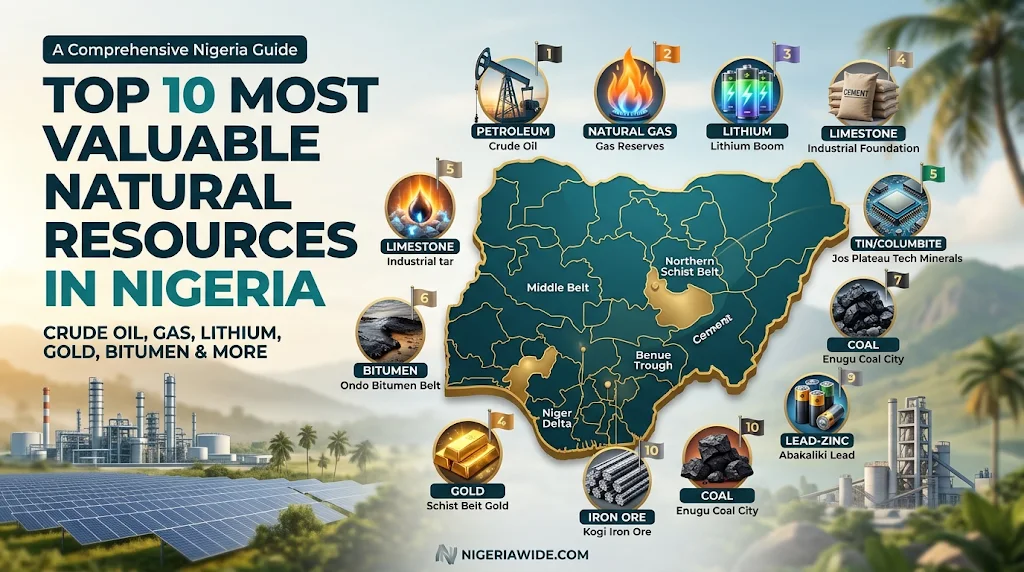
Explore the Full Series: Want the bigger picture? This guide is part of our deep dive into Nigeria’s extractive sector. Read our flagship report on the Top 10 Most Valuable Natural Resources in Nigeria to see how this fits into the country’s wider mineral and economic landscape.


Add Comment