
- October 1, 2026
- 9
- Culture
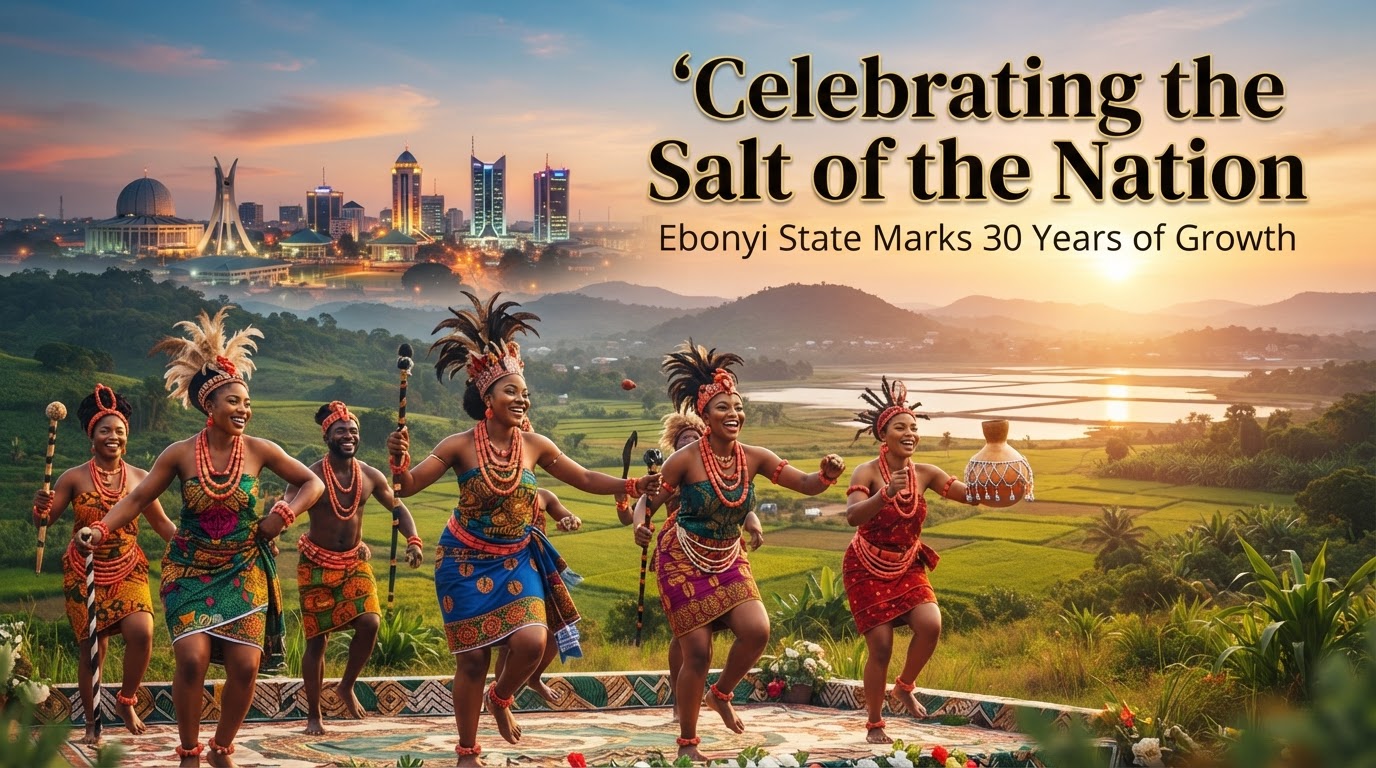
Abakaliki glows under the morning sun this October 1st. Abakaliki was once written off as a dusty rural outpost. Not anymore.
While Nigeria celebrates sixty-six years of independence, Ebonyi State marks its landmark 30th anniversary. Created from parts of old Enugu and Abia states on October 1, 1996, by General Sani Abacha, the state has spent three decades proving that geographical exclusion is just a challenge to be conquered, not a permanent sentence.
Why “Salt of the Nation”?
How did a collection of agrarian communities earn the proud moniker, the Salt of the Nation?
Look no further than the ancient salt lakes of Uburu and Okposi. For generations, local women harvested natural brine from these pools, boiling it down into blocks of salt that sustained regional trade long before modern commerce arrived. That natural salt became a metaphor for the character of the people: preserving, essential, and full of flavor.
The Infrastructure Revolution
For years, the state suffered from an underdeveloped tag, lacking basic urban amenities. Then came a massive physical metamorphosis.
The transformation of Abakaliki is legendary. Multi-lane flyovers cut through the city skyline. The Ebonyi International Cargo Airport (Chuba Okadigbo Airport) brought global connectivity to the doorstep. Above all, the extensive, durable concrete road networks built across the state became a national engineering blueprint, defying the heavy tropical rains that washed away asphalt elsewhere.
Rice, Agriculture, and Economic Might
You cannot talk about Nigerian staples without talking about Abakaliki rice.
Agriculture is the true backbone of the economy. Modernized milling clusters process thousands of metric tons of grains daily, feeding millions across the federation. Combined with vast limestone deposits and solid mineral wealth, the state shifted rapidly from a recipient of federal aid to a self-sustaining economic competitor in the Southeast.
Culture and Identity
Tradition beats powerfully beneath the modern concrete. The diverse clans—including the Ikwo, Izzi, Ezza, and Afikpo people—bring unique dialects, intricate wood carvings, and thunderous masquerade displays to the cultural table. Despite historical clan rivalries, a unified Ebonyi identity emerged over these thirty years, forging an unbreakable communal bond.
The Next Decade
Under Governor Francis Nwifuru, the development agenda has expanded beyond concrete roads into human capital development. Building schools and hospitals is matched by training teachers and equipping youth with technical skills, ensuring that physical structures are backed by empowered citizens.
Conclusion
Ebonyi at thirty is a masterclass in grit. From humble beginnings to architectural wonder, the Salt of the Nation has seasoned Nigeria’s history with resilience and pride. Here is to the next thirty years of unstoppable growth.
Want to trace the 30-year political and economic evolution of the state? Click here to learn more about its history. Or, if you are planning a trip and looking for local adventures, click here to discover the best of the state.


Add Comment