
- October 1, 2026
- 11
- Culture
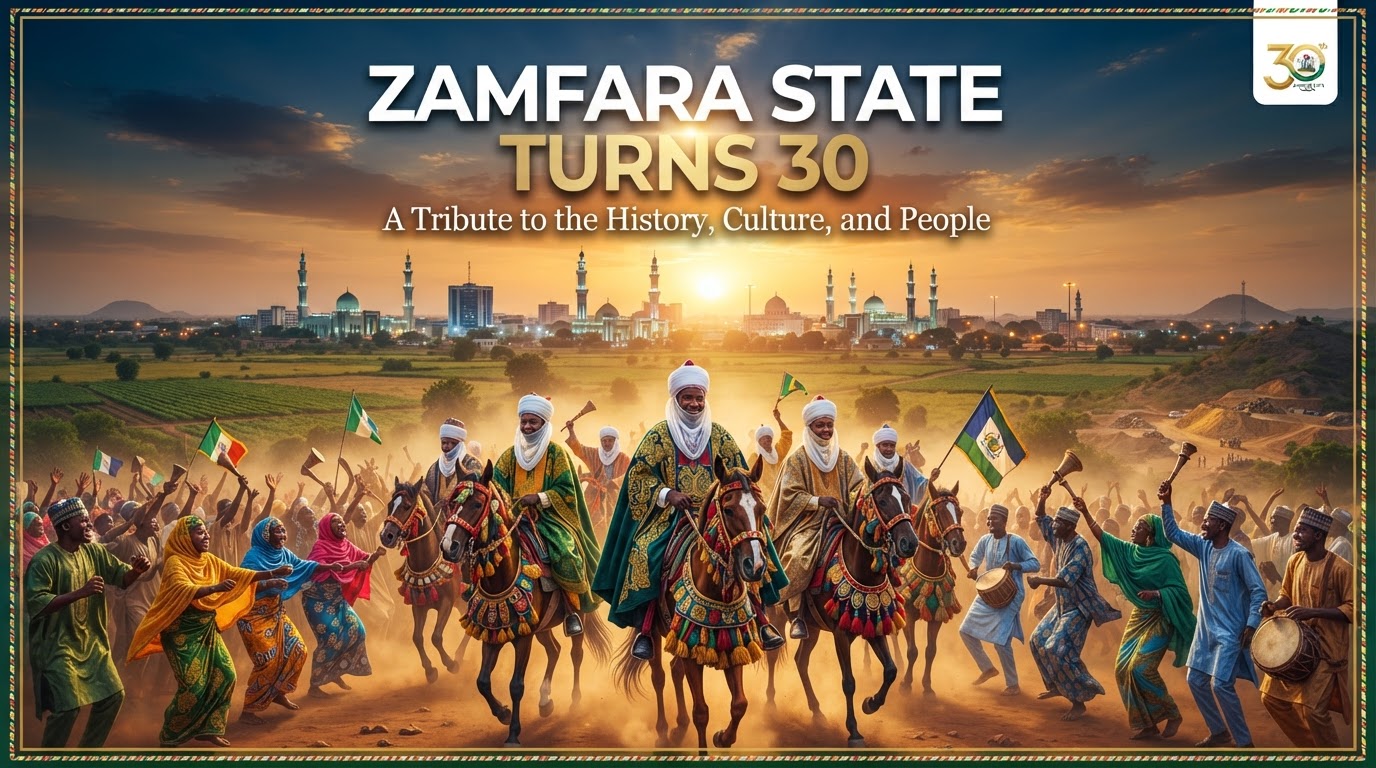
Morning breaks over Gusau with the familiar call to prayer cutting through the cool harmattan breeze. October 1, 2026. While the rest of the federation unfurls green-and-white banners for Nigeria’s 66th independence anniversary, this historic northwest territory marks its own quiet, profound milestone. Thirty years. Three decades have passed since the military administration of General Sani Abacha carved this land out of old Sokoto State on October 1, 1996.
The ancient kingdom of Zamfara reclaimed its administrative destiny that day. It was not just a bureaucratic realignment. It was a homecoming for a people whose roots stretch back centuries into the golden eras of Hausa states and scholarship.
Farming for Our Pride
Mention the state, and one phrase immediately comes to mind: Farming for Our Pride. It isn’t just a slogan painted on billboards. It is the literal heartbeat of the land.
Gusau was once known only for its textile mills. Today, it stands as a symbol of endurance under pressure. The plains stretching toward Kaura Namoda and Talata Mafara have fed millions for generations. Historically, this soil produced massive quantities of cotton, groundnuts, corn, and tobacco that fed the massive industrial textile mills of northern Nigeria. Farmers here wake up before dawn, tending to crops with a generational discipline that modern economic shifts have failed to break. When the rains come, the earth yields abundantly, reminding everyone that agriculture remains the true anchor of northern prosperity.
Gold, Minerals, and the Mining Economy
Beneath the surface lies another kind of wealth. Gold mining in Zamfara is legendary, pulling fortune-seekers and artisanal operators to rural communities in Anka, Maru, and Bukkuyum.
The economic potential is staggering. Untold metric tons of solid minerals rest under the earth. Yet, this wealth has come with a heavy price. The rush for solid minerals birthed complex socio-economic and security challenges that have tested the resolve of the state. Criminal networks and illegal syndicates cast shadows over what should be a straightforward economic blessing. Turning this underground treasure into a clean, regulated economic driver is the ultimate test for modern policymakers.
Key Institutions Built Over Three Decades
A state cannot grow on soil and minerals alone. It needs minds. It needs institutional walls to secure its intellectual future.
Over the last thirty years, the educational landscape has shifted dramatically. The establishment of the Federal University, Gusau (FUGUS) opened doors for thousands of young people who previously had to travel hundreds of kilometers for tertiary education. Alongside it, Zamfara State University in Talata Mafara took root, training the next generation of professionals. Healthcare infrastructure also saw vital upgrades, anchored by institutions like the Federal Medical Centre, Gusau, bringing specialized care closer to citizens.
Cultural Roots and Heritage
Traditional institutions provide the social glue holding everything together. The Emir of Gusau, alongside the historic emirates of Kauran Namoda, Anka, and Bakura, preserves a centuries-old code of honor, justice, and community service.
Traditional cultural events, local leatherworks, and blacksmithing display a heritage untouched by time. The resilience embedded in the Hausa and Fulani communities running through these towns is remarkable. They have faced structural hardship, yet their hospitality remains legendary. Visitors are still welcomed with steaming calabashes of locally brewed zobo or fresh milk, a testament to a culture built on generosity.
Shifting the Narrative
Thirty years on, the administration of Governor Dauda Lawal faces the heavy task of rewriting the state’s daily news cycle. Security reforms, agricultural revitalization programs, and transparent management of mineral resources are the current agenda.
Infrastructure projects are crawling into neglected corners. Educational access is expanding to rural children. The goal is simple: reclaim the peace, restore the farms, and give the youth a reason to stay and build.
Conclusion
Zamfara State at thirty is battered, bruised, but unbroken. The history of this territory proves that empires rise and fall, but the spirit of the people outlives the storm. As the sun sets over the Gusau skyline tonight, the message from the plains is clear. The next thirty years belong to peace, productivity, and unbreakable unity.
Want to trace the 30-year political and economic evolution of the state? Click here to learn more about its history. Or, if you are planning a trip and looking for local adventures, click here to discover the best of the state.


Add Comment