
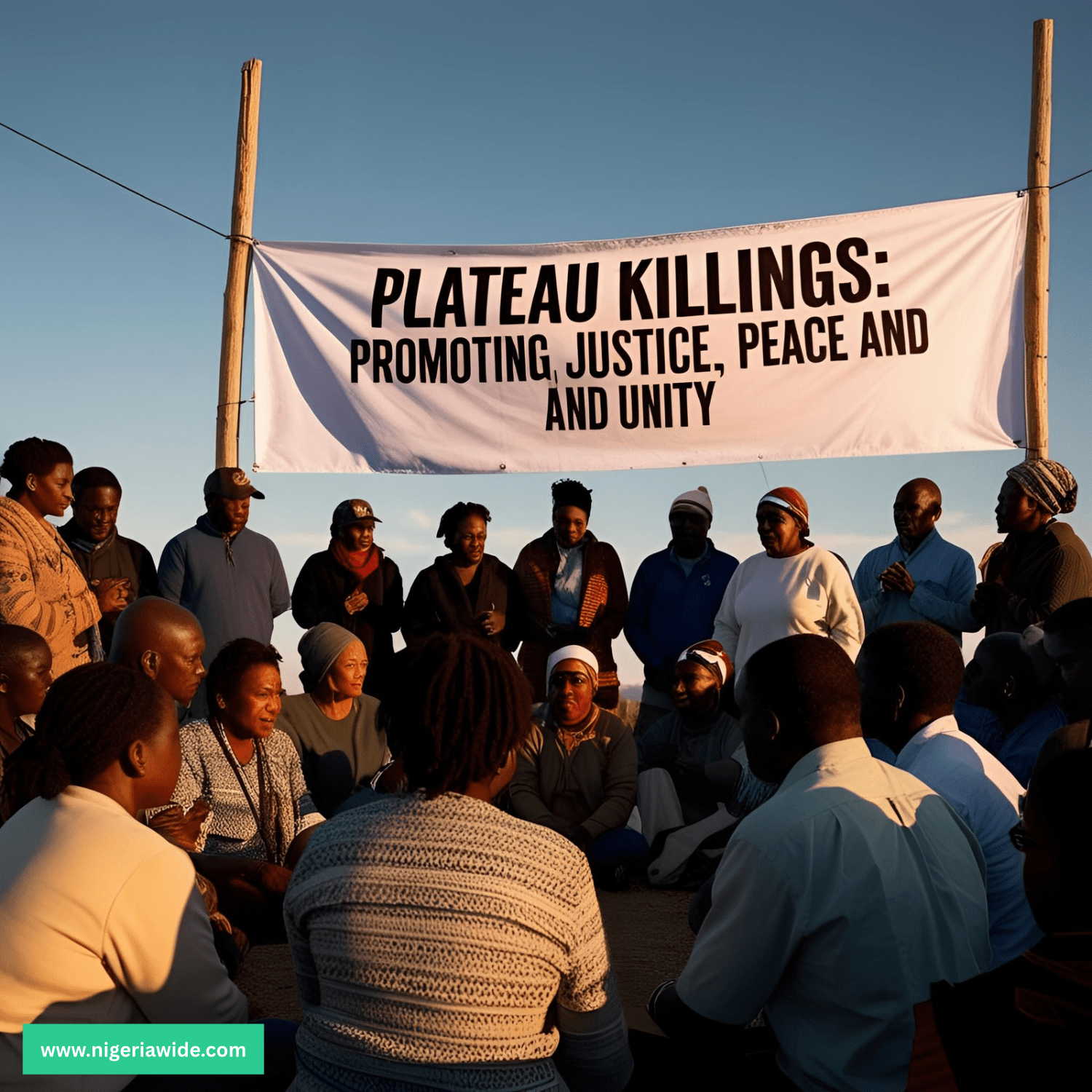
The Plateau Killings has once again drawn national and global attention to the tragic and recurring violence affecting rural communities in Plateau State, Nigeria. Over the years, waves of brutal attacks in village communities have claimed thousands of lives, displaced families, and torn the social fabric of one of Nigeria’s most culturally diverse regions. While the pain and trauma are undeniable, this crisis also presents an urgent opportunity for Nigeria to confront deep-rooted issues and work collectively toward justice, peace, and unity.
The Tragedy of the Plateau Killings
The recent attacks in Plateau’s village communities—particularly in areas like Bokkos, Mangu, and Barkin Ladi—have been characterized by night raids, mass killings, destruction of homes, and widespread displacement. These attacks have affected men, women, and children indiscriminately, leaving behind a trail of sorrow, fear, and anger.
Victims of these atrocities have cried out for justice. The affected communities, made up of diverse ethnic and religious groups, have long-standing histories and shared heritage—but have also been divided by conflict, misinformation, and a lack of trust.
Understanding the Underlying Causes
To chart a way forward, it’s essential to understand the complex causes of the Plateau crisis. These include:
- Ethnic and Religious Tensions: Plateau State is home to both Christian and Muslim communities, as well as numerous ethnic groups. Historical mistrust and political marginalization have led to social divisions.
- Land and Resource Conflicts: Competition over farmland and grazing routes has intensified between farmers and pastoralists, especially during periods of environmental stress and population growth.
- Weak Security and Lack of Accountability: Inadequate policing, delayed response to attacks, and limited prosecutions of perpetrators contribute to a sense of impunity.
- Political Manipulation: Some local and national actors have exploited ethnic and religious differences for political gain, deepening division.
Solutions for Lasting Peace and Justice
Though the challenges are enormous, sustainable peace is achievable through deliberate and inclusive efforts at every level of society.
1. Justice and Accountability for Victims
The foundation of peace is justice. The government must take urgent action to investigate and prosecute all perpetrators of violence—regardless of ethnicity, religion, or political affiliation.
Action Point: Establish independent commissions to investigate attacks and ensure speedy trials in special courts for crimes related to communal violence.
2. Community Dialogue and Reconciliation
Bridging the divide between communities is key to preventing future violence. Inter-community dialogue programs should be supported by both government and civil society.
Action Point: Create local peace committees made up of elders, women, youth leaders, and religious figures to promote mutual understanding and conflict resolution.
3. Strengthening Security Infrastructure
Peace cannot be achieved in the absence of safety. Local and federal security forces must be adequately trained, equipped, and held accountable in their duty to protect all lives without bias.
Action Point: Deploy community policing units that understand local dynamics, and increase investment in early warning and response systems.
4. Economic Empowerment and Development
Many rural communities in Plateau suffer from poverty, unemployment, and underdevelopment. These conditions create fertile ground for conflict.
Action Point: Launch inclusive economic development programs that provide youth with skills, jobs, and startup capital, with a focus on agriculture, small-scale manufacturing, and digital literacy.
5. Promoting Interfaith Unity
Religious leaders must be at the forefront of peace advocacy, using their platforms to promote tolerance, forgiveness, and cooperation.
Action Point: Organize interfaith events, joint community projects, and media campaigns that highlight stories of peaceful coexistence in Plateau and beyond.
6. Inclusive Governance
Ethnic and religious minorities must feel represented in government decisions and development plans.
Action Point: Implement inclusive political frameworks and ensure fair representation at local and state levels, reflecting the true diversity of Plateau communities.
A Call to National Unity
The Plateau Killings is not just a regional issue—it is a national concern. It tests the soul of our country and our commitment to unity in diversity. Every Nigerian, regardless of background, has a role to play in promoting peace and justice.
Civil society organizations, the media, traditional institutions, and everyday citizens must rise above division and work together to build a Nigeria where every community feels safe, heard, and valued.
Conclusion
The brutal attacks in Plateau villages are a painful reminder of the work that remains in our journey toward a peaceful and united Nigeria. But through justice, dialogue, inclusive governance, and community empowerment, we can break the cycle of violence. The time to act is now.
Peace is not the absence of conflict—it is the presence of justice, equality, and mutual respect.

Add Comment