
Two apps just inherited Nigeria’s entire ride-hailing and delivery market — and most people didn’t even notice it happening until this week.
With Uber gone, everyone who relied on it is redistributing themselves across Bolt and inDrive: the commuter heading to work, the small business owner who dashes packages across town, the driver who needs a new platform, the dispatch rider looking for steady requests. Following the recent news of Uber’s exit from Nigeria, all of these people are asking some version of the same question — which app actually deserves my time and money?
This is the honest, no-sponsor-fluff breakdown of Bolt vs inDrive Nigeria — covering riders, senders, drivers, and dispatch riders alike, so everyone affected by the exit knows exactly where to go next.
The Battle of the Models: How They Actually Work
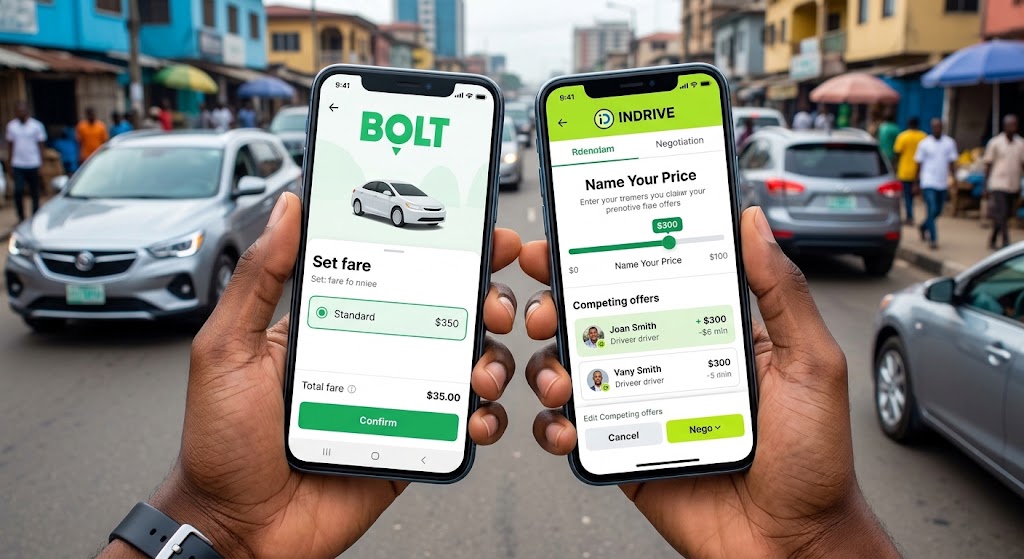
Before picking a side, you need to understand that Bolt and inDrive aren’t the same type of product wearing different logos. They run on fundamentally different philosophies — and that applies to both their ride-hailing and delivery services.
Bolt: The Algorithm Decides
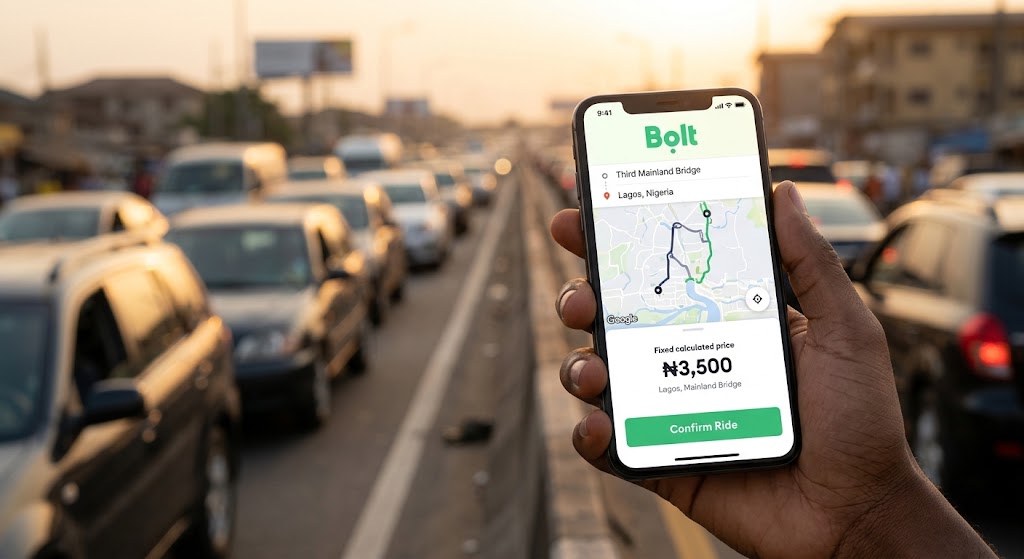
Bolt operates the way Uber did. You request a ride or delivery, the app calculates a price using its own algorithm, and that’s what you pay — no negotiation, no back-and-forth.
- Prices adjust automatically based on distance, traffic, and demand
- Surge pricing kicks in during rain, rush hour, or major events (think Third Mainland Bridge at 5pm)
- For package delivery, Bolt Send works the same way — enter pickup and drop-off details, get a fixed quote, and a courier is dispatched to collect your item
It’s fast, predictable, and familiar — the closest thing to “Uber, but Estonian instead of American.”
inDrive: You Call the Shots
inDrive runs on a genuinely different idea: a peer-to-peer bargaining model, and it applies this same logic to both rides and deliveries.
- You open the app, enter your destination (or your package’s pickup/drop-off points), and suggest what you’re willing to pay
- Nearby drivers or couriers can accept your offer or send back a counter-price
- You pick whichever offer works best — sometimes based on price, sometimes on rating or transport type
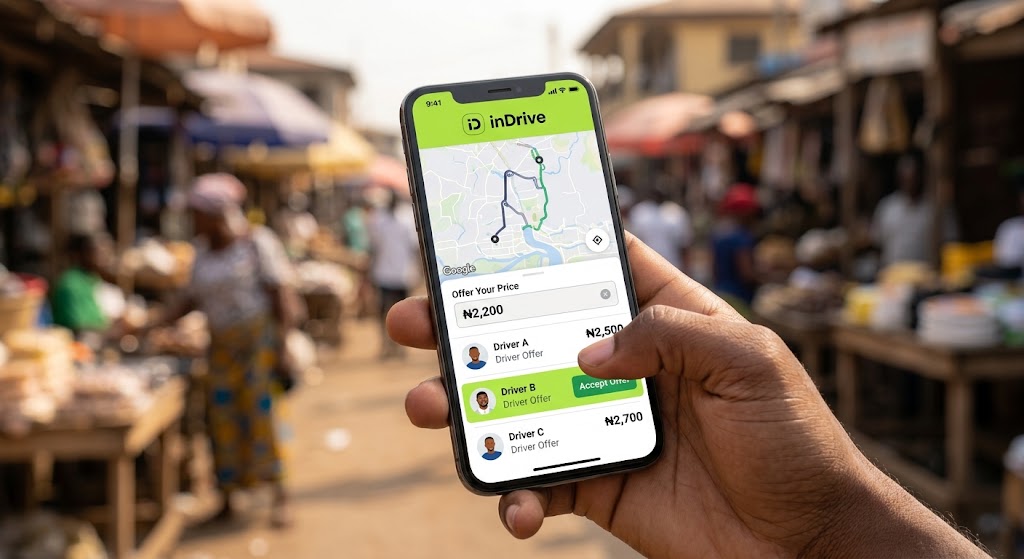
inDrive bargaining feels a lot like haggling with an okada or keke rider back in the day, except now it’s digital and you can see ratings before you commit. For Nigerians used to negotiating everything from market prices to rent, this model just feels natural — and it’s a big part of why inDrive has grown into one of the country’s leading platforms for both passenger transport and last-mile delivery.
The Rider’s Showdown: Price, Availability, Safety, Reliability
This is what actually matters when you’re standing under the sun in Ikeja waiting for a ride, or trying to leave a wedding in Wuse 2 at midnight.
Price: Who’s Really Cheaper?
There’s no single “cheapest ride-hailing app Lagos” winner across the board — it genuinely depends on the trip and your patience level.
- inDrive tends to win when you know the route and negotiate smartly. Because you set the opening price, you have real room to land below what a fixed algorithm might charge.
- Bolt tends to win on convenience during off-peak hours, since its fixed pricing removes the back-and-forth entirely — you just confirm and go.
- During peak hours or bad weather, Bolt’s surge pricing can climb fast. This is exactly when inDrive’s negotiation model gives riders more control, since you’re not at the mercy of an algorithm reacting to rain or rush-hour demand.
Key takeaway: If you want speed and don’t mind paying for it, Bolt is your app. If you have a few extra minutes and want to negotiate, inDrive tends to reward the patient.
Vehicle Availability
Bolt has built a large, well-established driver base across Nigerian cities over the years, which generally translates to shorter wait times in busy areas like Lekki, Garki, or GRA Port Harcourt. inDrive’s network has expanded fast too — it now operates in cities like Port Harcourt, Abuja, Kano, Kaduna, Benin City, Enugu, and several others — but coverage can still feel thinner in some neighborhoods outside the main hubs.
If you need a car in the next two minutes, Bolt currently has the edge on raw availability in most major Nigerian cities.
Safety Features
Both apps offer core safety tools: in-app SOS/emergency buttons, driver verification during onboarding, and the ability to share your trip details with someone you trust. inDrive’s model adds one extra layer some riders appreciate — because you’re choosing your driver from a list of bidders, you can review their rating and decline before the ride even starts, rather than being auto-matched.
Bottom line: Neither app is flawless, but both are miles ahead of jumping into an unmarked “chartered” vehicle. Always confirm the driver’s plate number matches the app before entering, regardless of which platform you use.
Reliability During Peak Hours
This is where Nigerian roads test these apps hardest. During heavy rain or the classic 6pm Lagos gridlock:
- Bolt will almost always find you a driver, but expect the fare to climb with surge pricing.
- inDrive can take a little longer to get an accepted offer during peak chaos, since drivers are fielding multiple bid requests and may skip lowball offers entirely.
Practical tip: During rush hour or bad weather, don’t lowball on inDrive — offer a fair or slightly generous price if you want a quick match.
The Sender’s Showdown: Bolt Send vs inDrive Courier
If you’re the person who used to dash a package across town without leaving your desk, this section is for you. Both apps have quietly built out serious delivery arms.
Bolt Send
Launched in Nigeria in 2023, Bolt Send lets you request a courier straight from the Bolt app to pick up and drop off a package — no need to arrange separate transport. A few practical details worth knowing:
- You enter pickup and drop-off details, get a fixed price, and a courier is dispatched
- Packages are capped at 25kg and a declared value of ₦50,000
- Prohibited, hazardous, highly fragile, and highly perishable items aren’t accepted
- Currently available in a handful of Nigerian cities, having expanded to Owerri as its fourth city, alongside Lagos, Abuja, and Port Harcourt
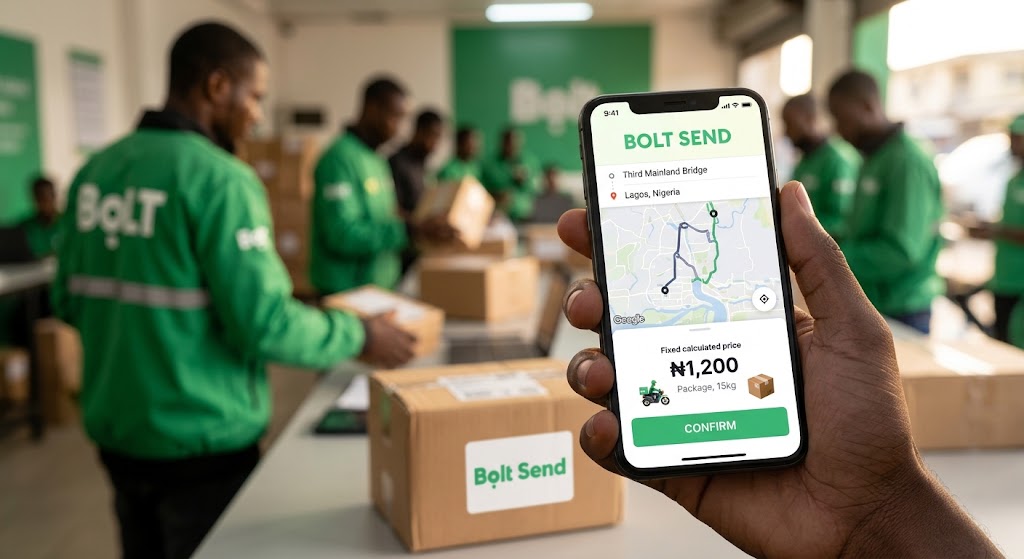
For small business owners who need predictable delivery costs to quote customers, Bolt Send’s fixed pricing makes budgeting easier.
inDrive Courier
inDrive applies its signature bargaining model to deliveries through inDrive.Courier, and it’s grown fast — the platform’s Nigerian courier business reportedly saw significant year-on-year growth in 2025 as more people, especially motorcycle couriers, adopted the app-based delivery model. On the sender’s side:
- You enter your pickup and drop-off points, choose a delivery type (moto, auto, or on-foot), and offer your own price
- Couriers can accept your offer or counter with theirs
- You pick a courier by price, rating, distance, or transport type before confirming
- For anything above 20kg, inDrive points senders to its freight shipping option instead
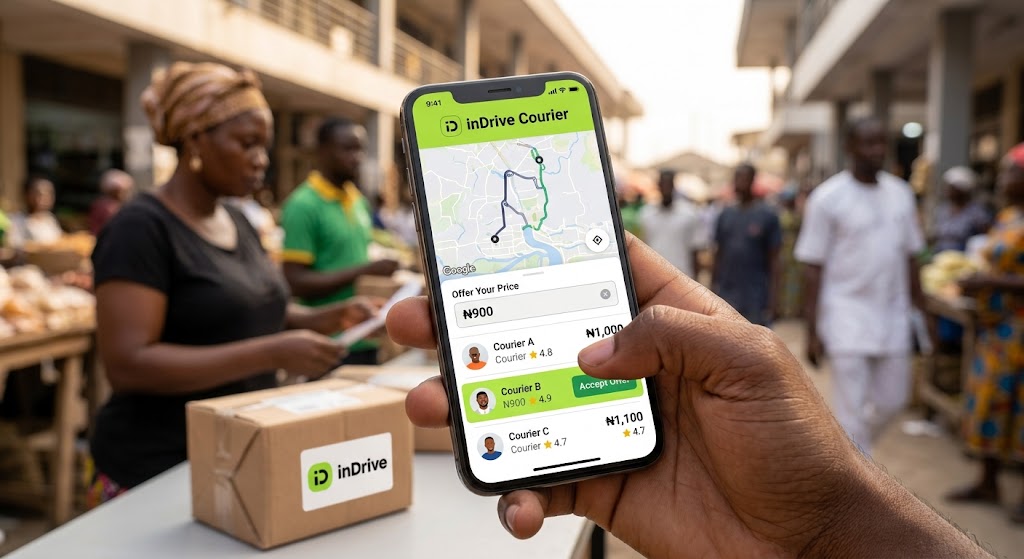
For senders who know roughly what a delivery should cost and want to avoid overpaying, inDrive’s negotiation model can work out cheaper — but it may take a little longer to lock in a courier compared to Bolt’s instant fixed quote.
Key takeaway: Choose Bolt Send when you need a fast, predictable price for a standard delivery. Choose inDrive Courier when you want to negotiate the price down and don’t mind waiting a few extra minutes for offers to come in.
The Driver’s Reality Check: Commissions, Earnings, and Flexibility
Now let’s talk to the real backbone of this industry — the drivers and dispatch riders. With Uber gone, this decision affects daily bread, not just convenience.
Bolt Commission for Drivers
According to Bolt’s own driver guide, the company charges a 20% commission on the final price of every ride in Nigeria — applied to both cash and card payments, as well as cancellation fees. This same commission structure generally extends to Bolt Send couriers. In exchange, drivers and couriers get:
- Predictable earnings per trip, since the fare is fixed by the app before the job starts
- Regular incentive programs and bonuses tied to completing set numbers of trips or deliveries
- A large, steady stream of requests thanks to Bolt’s wide user base
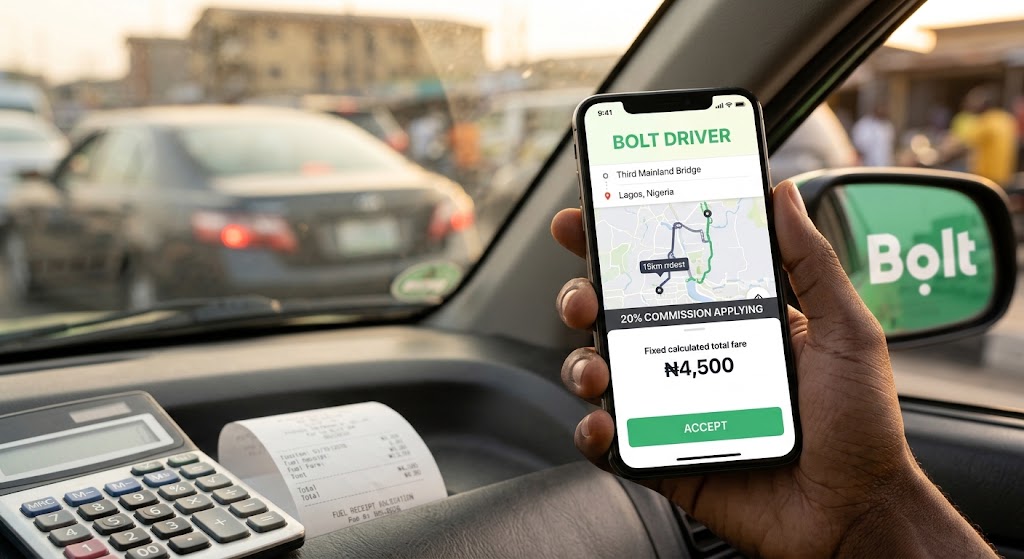
Some drivers report that after fuel, maintenance, and vehicle rental costs, take-home pay varies widely depending on whether they own or rent their vehicle — owners typically retain significantly more than renters.
inDrive’s Earning Potential
inDrive has built its entire Nigerian growth story around low commission rates — historically among the lowest in the industry, reported at around 10% or less of each fare, with the company even running promotions cutting commission to as low as 0.1% during peak hours in some cities like Abuja. This low-commission approach carries over to its courier business too, where inDrive has reported that its Nigerian courier fleet grew rapidly through 2025, with average motorcycle couriers completing around 50 deliveries a month — turning what started as a side hustle into a primary income source for many riders.
Because drivers and couriers can counter-offer proposals, there’s also a real opportunity to:
- Push back on lowball offers instead of accepting whatever an algorithm decides
- Set a personal minimum acceptable price based on real fuel and time costs
- Choose which trips or deliveries to accept, prioritizing what’s most profitable that day
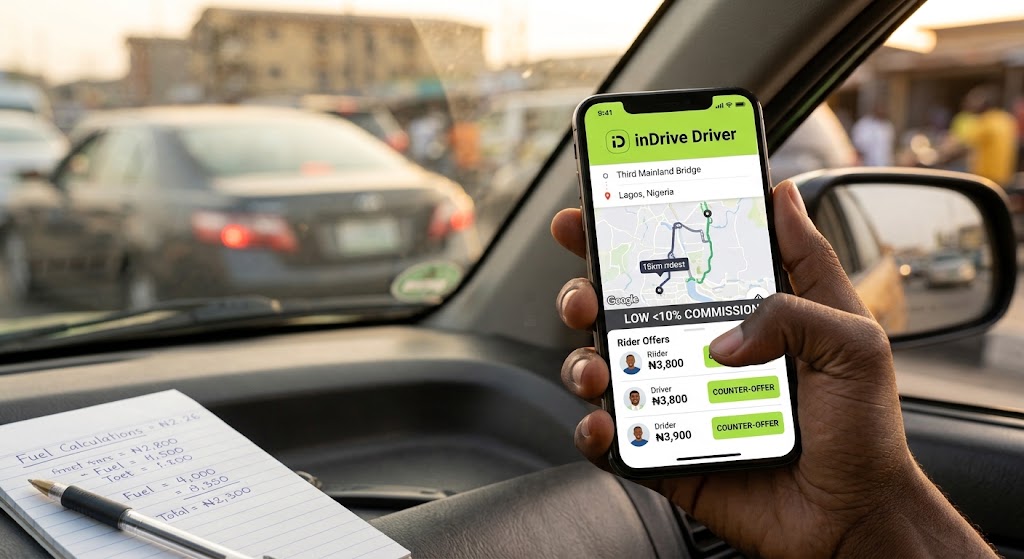
inDrive has also reported that Nigerian drivers on its platform saw a 39.65% increase in earnings in the first half of 2025 compared to the same period a year earlier — a claim from the company itself, so treat it as a data point rather than gospel, but it does reflect the platform’s rapid growth in the country.
The trade-off: more back-and-forth negotiation eats into your time, and on a busy day you might reject a few offers before landing a fair one.
Flexibility Comparison
| Factor | Bolt (Rides & Send) | inDrive (Rides & Courier) |
|---|---|---|
| Commission rate | 20% (fixed) | Around 10% or less, varies by promo |
| Fare control | None — app decides | High — driver/courier can counter-offer |
| Speed of matching | Fast, automatic | Can be slower, request-by-request |
| Best for | Consistent daily volume | Drivers/couriers who know their routes and value their time |
Key takeaway: Bolt’s higher commission is offset by faster, more predictable matching — good for drivers and couriers who want volume without haggling. inDrive’s lower commission means you keep more of each fare, but you’ll spend more time negotiating to land it — a fair trade for street-smart operators feeling the pinch of today’s fuel price hikes.
The Verdict: Which One Should You Actually Download?
There’s no one-size-fits-all winner — and honestly, plenty of experienced Nigerians already run both apps side by side, whether they’re commuting, sending packages, or earning behind the wheel. But if you want a clear starting point:
Choose Bolt if you:
- Need a ride or delivery fast, without haggling
- Are traveling or sending a package during odd hours when few drivers are online
- Prefer predictable, upfront pricing over negotiation
- Are a driver or courier who wants steady, algorithm-matched jobs without back-and-forth
Choose inDrive if you:
- Have a few extra minutes and want to negotiate a fair price, whether for a ride or a delivery
- Know your route well and want to avoid surge pricing
- Are a driver or courier who wants to keep more of each fare and control what you accept
- Value being able to see and choose your driver or courier before committing
Our honest take: For the average daily commuter dealing with unpredictable Lagos traffic, keep both apps on your phone. Lean on Bolt when you’re pressed for time, and switch to inDrive when you can spare a few minutes to bargain and protect your pocket from surge pricing. Small business owners sending packages regularly should test both Bolt Send and inDrive Courier to see which gives better rates on their specific routes. For drivers and dispatch riders, the smart move right now is to register on both platforms — with Uber gone, the demand that’s left behind hasn’t vanished; it’s simply being redistributed between these two players, and early movers stand to gain the most.
Uber’s exit stings, no doubt — 12 years of history doesn’t disappear overnight. But Nigerians have never needed a single option to get by; we adapt, we negotiate, and we find alternatives. Whether it’s Bolt’s speed or inDrive’s bargaining power, your next ride — or your next delivery — is still just a few taps away.
Have you tried both apps since the Uber exit? Drop your experience in the comments — riders, senders, drivers, and dispatch riders, we want to hear which one is winning in your city.


Add Comment