
- October 8, 2026
- 12
- Guides
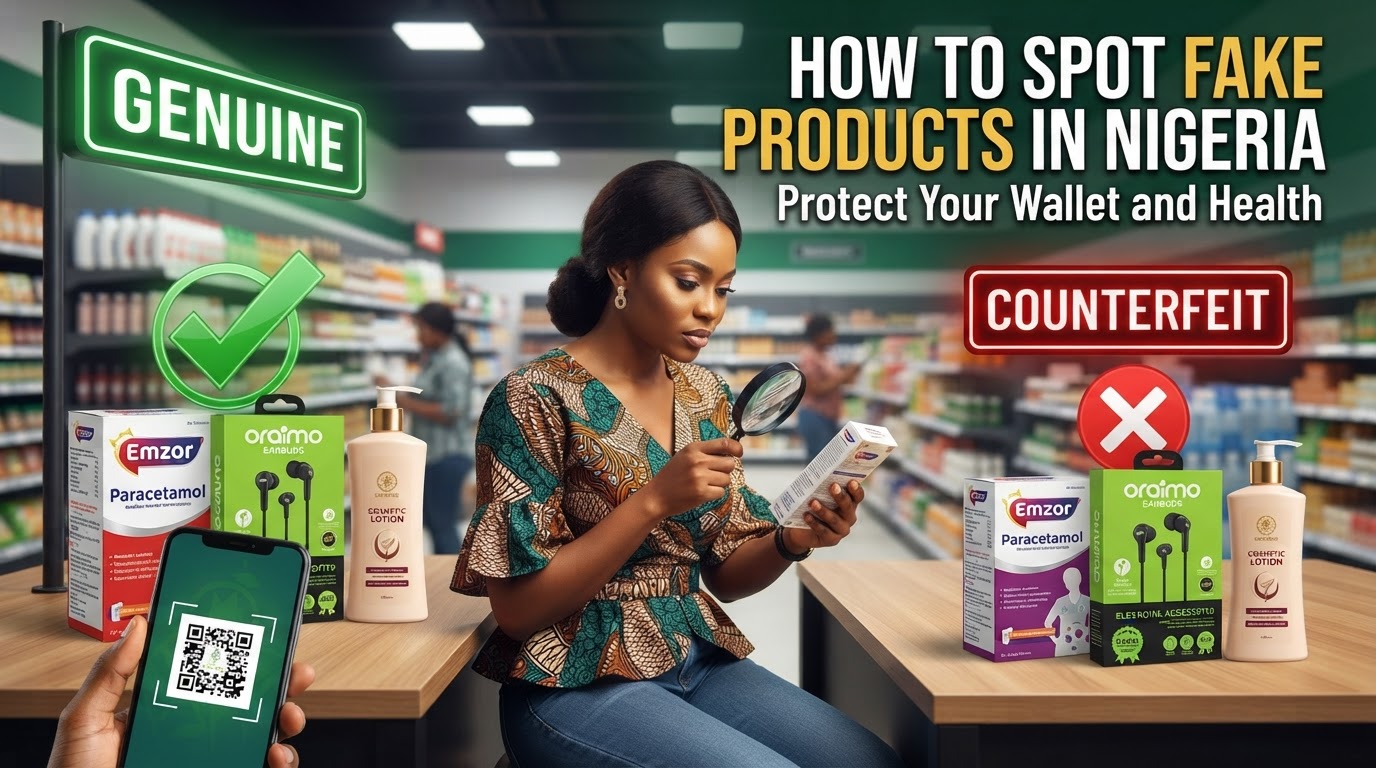
Every shopper in Nigeria has a story. A phone charger that died in a week. A “original” perfume that smelled like cheap spirit by evening. A bottle of syrup that did nothing for a child’s cough. Counterfeit and substandard goods are a daily reality in Nigerian markets, shopping malls and online stores, and the cost is more than money. Fake medicines, adulterated food and unsafe electronics can injure or kill.
This guide explains how fake products work, which categories carry the highest risk, and the practical checks you can run before you pay. It also tells you which Nigerian agencies to contact when you find a fake.
Why Fake Products Are Such a Problem in Nigeria
Several things feed the trade in counterfeits. Nigeria has a large import-dependent market, long and porous supply chains, and millions of price-sensitive buyers who are tempted by deals that look too good to be true. Open markets, roadside stalls and social media sellers also make it hard for regulators to monitor every transaction.
The health stakes are well documented. The World Health Organization has estimated that roughly one in ten medical products circulating in low- and middle-income countries is substandard or falsified. Fake anti-malarials, antibiotics and painkillers may contain too little active ingredient, the wrong ingredient, or nothing useful at all. That means treatment failure, drug resistance and, in severe cases, death.
For your wallet, counterfeits are a false economy. A fake item that fails in weeks costs you twice: once for the fake and again for the replacement.
Know the Agencies That Protect You
Before the checklist, learn the four institutions that matter most to Nigerian consumers:
- NAFDAC (National Agency for Food and Drug Administration and Control): regulates and registers drugs, packaged food, bottled water, cosmetics, medical devices, herbal products and chemicals.
- SON (Standards Organisation of Nigeria): sets and enforces product standards. Its MANCAP scheme covers locally made goods, while SONCAP covers imported goods.
- FCCPC (Federal Competition and Consumer Protection Commission): enforces the Federal Competition and Consumer Protection Act 2018, which protects consumers against misleading and unsafe goods and handles complaints.
- PCN (Pharmacy Council of Nigeria): licenses pharmacists and pharmacy premises.
Knowing who regulates what tells you where to verify a product and where to report a problem.
10 General Red Flags That a Product Is Fake
These warning signs apply to almost any product category.
- The price is far below market rate. Genuine brands rarely sell at half price. Compare the price across two or three reputable retailers.
- Poor packaging quality. Look for blurry printing, misspelt words, crooked labels, faded colours, loose seals or flimsy boxes.
- Missing or suspicious registration details. Packaged food, drugs, cosmetics and water must carry a NAFDAC number. Its absence is a serious red flag.
- Inconsistent batch details. Batch numbers, manufacturing and expiry dates should be clear and permanent. Smudged, stickered-over or hand-written dates are suspect.
- Wrong smell, texture or colour. Compare against a product you know is genuine.
- No receipt or return policy. Honest sellers stand behind what they sell.
- Unusual sellers. Street hawkers selling medicines, or social media pages with no address, no reviews and no history, deserve extra caution.
- Vague manufacturer information. A real product lists the manufacturer, its address and contact details.
- Weight and feel are off. Counterfeit electronics, tools and accessories often feel lighter or cheaper than the original.
- Pressure to buy now. “Last stock” and “no refund” are classic pressure tactics.
How to Verify a NAFDAC Number
A NAFDAC number looks reassuring, but counterfeiters copy numbers too, so always verify it. Nigerians have three practical options:
- Check the NAFDAC Greenbook. NAFDAC maintains an online database of registered products, known as the Greenbook. Search by product name or registration number to confirm that the product exists and that the details match what is on the pack.
- Use Mobile Authentication Service (MAS) where available. Some products carry a scratch panel. You scratch it to reveal a code and send that code by SMS to the short code printed on the pack (NAFDAC’s MAS number has long been 38353; confirm the current instructions on the label or NAFDAC’s website). You receive a reply confirming whether the product is genuine.
- Match every detail. The product name, manufacturer and category on the pack should match the register. A number that belongs to a different product is a strong sign of forgery.
No scratch panel does not automatically mean a product is fake, since the scheme does not cover every item. It does mean you should rely on the Greenbook check and your other senses.
Fake Drugs and Medicines: The Highest-Stakes Category
Where you buy matters more than anything else with medicines.
- Buy only from licensed pharmacies. Look for a displayed PCN premises licence and a registered pharmacist on duty. Avoid open markets, roadside stalls and itinerant drug vendors.
- Insist on a receipt and keep the original packaging.
- Inspect the pack. Check the NAFDAC number, batch number, manufacture and expiry dates, and the seal. Tablets that are crumbly, chipped, discoloured or inconsistent in shape should not be taken.
- Be suspicious of miracle claims. Products promising to cure diabetes, hypertension, cancer, HIV or erectile dysfunction in days are often unregistered or adulterated.
- Ask the pharmacist about the supplier. A reputable pharmacy sources from licensed distributors and can say where its stock comes from.
- If a medicine does not work as expected, stop and consult a doctor or pharmacist, and report the product to NAFDAC. Do not simply double the dose.
Fake Phones, Laptops and Electronics
Electronics are among the most heavily counterfeited goods.
- Check the IMEI. Dial *#06# on any phone to display its IMEI number, then compare it with the number on the box and the phone’s settings. Mismatches are a warning sign. Manufacturers such as Apple and Samsung also let you check serial numbers on their official support pages.
- Buy from authorised dealers where possible, especially for premium brands. Ask for the warranty card and the seller’s physical address.
- Test the basics. Check screen quality, camera performance, battery health and storage capacity. Counterfeit phones often misreport their storage and use inferior components.
- Be careful with chargers, power banks and batteries. Fake ones are not just unreliable; they can overheat and cause fires. Choose branded accessories that carry proper safety and standards marks, and avoid ultra-cheap, unbranded power banks that claim implausibly large capacity.
- Keep the box, receipt and serial numbers in case you need to claim a warranty or lodge a complaint.
Fake Cosmetics, Skincare and Hair Products
Counterfeit cosmetics can cause burns, rashes, dark patches and long-term skin damage. Some skin-lightening products have been found to contain harmful substances such as mercury or excessive levels of hydroquinone and steroids.
- Confirm the NAFDAC number in the Greenbook.
- Avoid products with no ingredient list, no manufacturer details or labels in poor print.
- Be wary of unlabeled creams repackaged in unmarked jars or sold by weight.
- Do a patch test on a small area of skin before full use.
- Stop immediately if you experience burning, swelling or unusual discolouration, and see a doctor.
Adulterated Food, Drinks and Bottled Water
Food fraud ranges from relabelled expired goods to dangerous additives.
- Packaged food and drinks: check seals, expiry dates and NAFDAC numbers. Reject dented, swollen or leaking packs.
- Bottled and sachet water: unregistered water brands exist. Choose brands with a verifiable NAFDAC number and an intact cap seal.
- Palm oil: NAFDAC has previously warned about palm oil adulterated with industrial dyes such as Sudan IV, which are not safe for food. Buy from trusted sources and be cautious of oil that is unnaturally bright red.
- Spirits and alcohol: counterfeit alcohol can contain methanol, which is toxic. Buy from reputable outlets and check for tampered seals and mismatched labels.
- Be careful with viral claims. Stories such as “plastic rice” have circulated widely on social media, and official investigations have repeatedly failed to confirm them. Rely on NAFDAC announcements rather than forwarded messages.
Fake Auto Parts, Tyres and Engine Oil
Counterfeit car parts endanger everyone on the road.
- Tyres: check the DOT code on the sidewall. Its last four digits show the week and year of manufacture. Tyres older than about six years should be treated with caution, even if unused.
- Engine oil and brake fluid: buy sealed products from reputable dealers. Check the seal, label printing and batch codes. Dirty, watery or unusually thin oil from a “cheap” container is a red flag.
- Brake pads, filters and batteries: buy from known dealers, request receipts and compare part numbers with your vehicle manual or the manufacturer’s catalogue.
- Ask for a warranty. Genuine parts usually come with one.
How to Shop Safely Online in Nigeria
Online shopping is convenient, but it is also where many fakes and scams circulate.
- Use established platforms with buyer protection, and prefer sellers marked as official stores or with strong, consistent review histories.
- Read the negative reviews first. Complaints about authenticity, delays or refusal to refund reveal patterns.
- Beware of stock photos. Ask social media sellers for live photos or a short video of the exact item.
- Prefer pay-on-delivery where it is offered, and inspect the product before the rider leaves.
- Avoid paying into personal accounts for large purchases from sellers you do not know.
- Check the return policy before ordering, and screenshot the listing, price and seller details.
- Unbox on camera for high-value items. It can be powerful evidence in a dispute.
What to Do If You Buy a Fake Product
- Stop using it, especially if it is a drug, cosmetic or electrical item.
- Keep the evidence: the product, packaging, receipt, chat history, payment proof and photos.
- Go back to the seller and request a refund or replacement in writing.
- Report it. Send drug, food, cosmetic and water complaints to NAFDAC. Send substandard goods and standards issues to SON. Send consumer rights and refund disputes to the FCCPC. Check each agency’s official website for current contact channels, because phone numbers and email addresses change.
- Seek medical help if you took a suspect medicine or used a harmful product and feel unwell. Tell the doctor what you took and bring the pack.
- Warn others by leaving an honest review on the platform where you shopped.
Reporting matters. Many enforcement raids and product recalls start with consumer complaints.
Official agency websites: NAFDAC | SON | FCCPC | PCN
Quick Checklist Before You Pay
- Is the price realistic?
- Is the seller reputable and traceable?
- Is the NAFDAC or SON information present and verified?
- Do batch numbers and dates look genuine and untampered?
- Is the packaging sealed and well printed?
- Do I have a receipt and a return option?
If you answer “no” to any of these, walk away.
Frequently Asked Questions
How can I tell if a product in Nigeria is NAFDAC approved?
Find the NAFDAC registration number on the pack, then confirm it in the official NAFDAC Greenbook database or through the product’s mobile authentication option where available. Check that the product name and manufacturer match the record.
Are products without scratch codes fake?
Not necessarily. The scratch-and-text system does not cover every product. Use the Greenbook and the other checks in this guide.
How do I know if my phone is original?
Dial *#06# to display the IMEI, compare it with the box and settings, verify the serial number with the manufacturer, and buy from authorised or trusted dealers with a warranty.
Where can I buy genuine medicines?
In licensed pharmacies with a PCN premises licence and a registered pharmacist. Avoid street vendors and open markets.
Who do I report fake products to?
Report drugs, food, cosmetics and water to NAFDAC; substandard goods to SON; and consumer complaints or refund disputes to the FCCPC.
Is cheap always fake?
Not always, since genuine sales and discounts exist. But a price far below market value should trigger extra checks.
Final Word
You cannot eliminate fake products from the Nigerian market on your own, but you can make yourself a hard target. Verify before you buy, favour licensed and traceable sellers, keep your receipts, and report what you find. Share this guide with family, friends and your WhatsApp groups. One verified purchase can save someone’s money, and sometimes their life.
Disclaimer: This article is for general information. Agency websites, hotlines and procedures change, so confirm current details with NAFDAC, SON, FCCPC and PCN directly. For medical concerns, consult a qualified healthcare professional.


Add Comment