
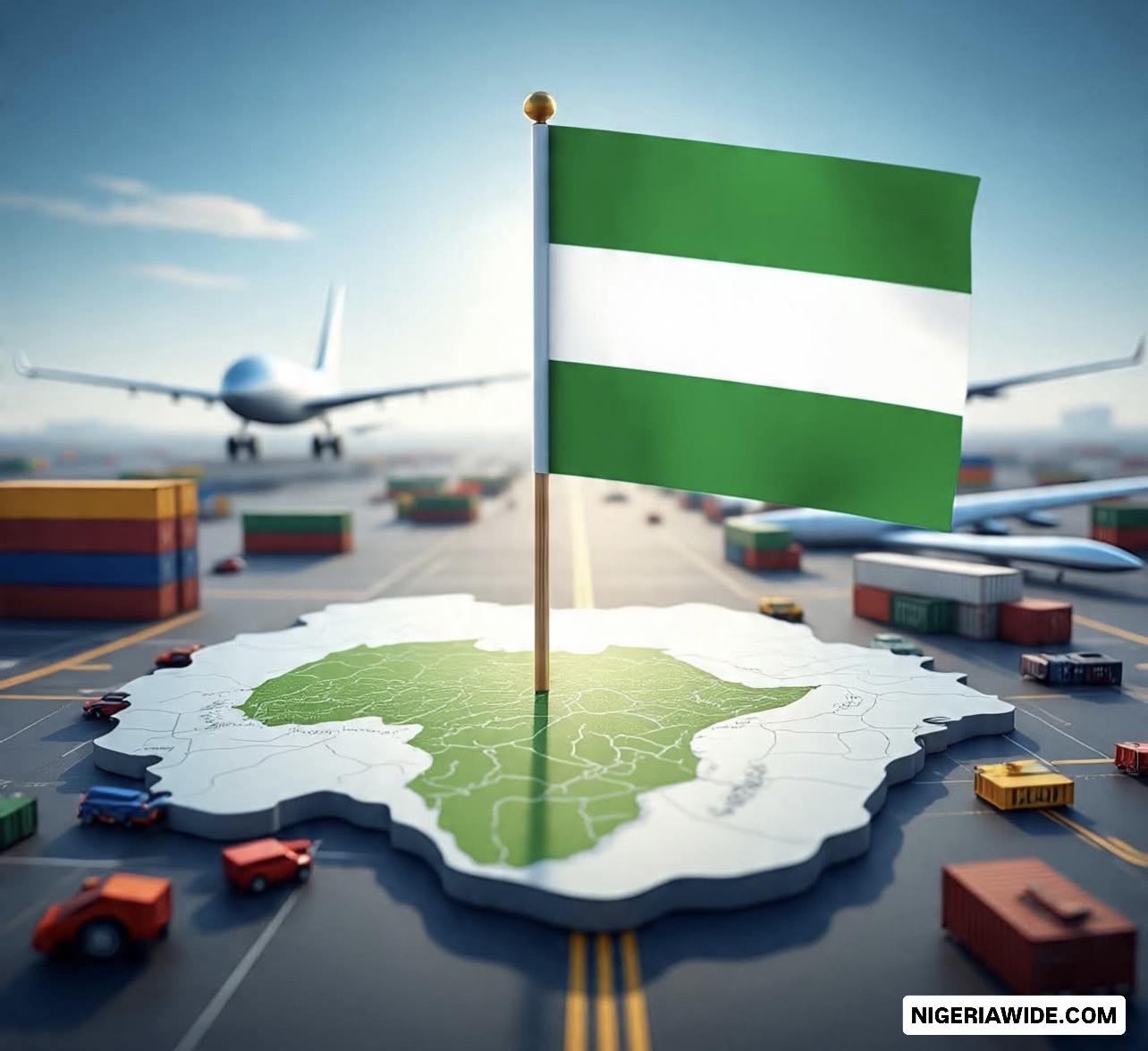
Selling across Africa from Nigeria is no longer just an expansion strategy—it is becoming a continental growth model for modern businesses. In 2026, Africa is increasingly connected through digital commerce, improved logistics networks, and one of the most important economic frameworks in modern history: the African Continental Free Trade Area (AfCFTA).
For business owners operating in Nigeria—whether local entrepreneurs, foreign investors, or global manufacturers sourcing from regions like China and the UAE—this creates a powerful opportunity to scale across multiple African markets with fewer trade barriers and more predictable logistics systems.
However, the real enabler of this expansion is not just trade policy—it is 3rd Party Fulfillment (3PL).
Instead of shipping products individually from Nigeria to customers across Africa, businesses now use regional fulfillment centers where inventory is stored closer to consumers. Orders are then processed and delivered locally, making your business operate like a native brand in each country.
Why Nigeria is the Strategic Base for African Expansion
Nigeria has become one of the most important commercial gateways in Africa. It is a large import market, a fast-growing e-commerce hub, and a key distribution point for goods entering the continent.
Many businesses structure their African expansion from Nigeria, especially when sourcing from global manufacturing hubs such as:
- China
- United Arab Emirates
Nigeria allows businesses to consolidate shipments, test product demand, and manage inventory before expanding into other African regions.
This structure reduces operational complexity and provides a controlled environment for scaling across the continent.
AfCFTA and Why It Changes Everything for African Trade
The African Continental Free Trade Area (AfCFTA) is one of the most important trade agreements in the world today. It connects over 50 African countries into a single trading bloc with reduced tariffs and simplified cross-border trade procedures.
For businesses operating from Nigeria, AfCFTA means:
- Reduced tariffs between African countries
- Easier cross-border movement of goods
- Improved customs harmonization
- Expanded market access across the continent
- Increased competitiveness for African-made and distributed goods
In practical terms, AfCFTA makes it easier for a business in Nigeria to sell in Kenya, Ghana, South Africa, or Morocco without facing the same level of trade friction that existed previously.
However, AfCFTA alone does not solve logistics delays. This is where 3PL fulfillment networks become essential—they turn trade policy into real delivery capability.
How 3PL Fulfillment Works Across Africa
The 3PL model is based on decentralization. Instead of storing all inventory in one country, businesses distribute stock across regional fulfillment hubs.
When a customer places an order, the nearest warehouse processes and delivers it locally.
This system reduces delivery time from weeks to a few days and allows businesses to scale across multiple countries at once.
It works best when aligned with AfCFTA because reduced tariffs and smoother cross-border policies make regional distribution more efficient.
African Markets by Region and 3PL Logistics Ecosystem
Africa can be structured into four key commercial regions, each supported by specific logistics infrastructure and fulfillment networks.
West Africa (Nigeria, Ghana, Côte d’Ivoire, Senegal)
West Africa is the most accessible entry point for Nigerian-based businesses. It benefits from geographic proximity, cultural similarities, and growing digital commerce adoption.
Nigeria acts as the primary hub, while Ghana serves as a secondary distribution gateway.
Key logistics providers include:
GIG Logistics – Nationwide delivery and warehousing network.
Sendbox – E-commerce fulfillment and automation system.
Red Star Express – Reliable courier services with international reach.
DHL Ghana – Strong international and regional logistics coverage.
FedEx Ghana – Cross-border shipping and enterprise logistics.
West Africa is ideal for fast product testing, low-cost distribution, and early-stage expansion.
East Africa (Kenya, Tanzania, Uganda, Rwanda)
East Africa is one of the fastest-growing digital economies in Africa, driven by mobile money and technology adoption.
Kenya serves as the logistics hub due to its advanced infrastructure.
Key logistics providers include:
Sendy – Technology-driven logistics and delivery coordination.
G4S Kenya – Secure warehousing and supply chain services.
DHL Kenya – International freight and fulfillment services.
Aramex Kenya – Regional and cross-border delivery network.
East Africa is best for mobile-driven commerce and multi-country expansion strategies.
Southern Africa (South Africa, Namibia, Botswana, Zimbabwe)
Southern Africa is the most advanced logistics region on the continent. South Africa is the central fulfillment hub due to its strong infrastructure and retail ecosystem.
Key logistics providers include:
Parcelninja – Automated e-commerce fulfillment platform.
BobGo – Multi-courier shipping aggregation system.
The Courier Guy – Nationwide last-mile delivery provider.
RAM Hand-to-Hand Couriers – Secure premium logistics services.
DHL Supply Chain – Enterprise-level warehousing and distribution.
Southern Africa is ideal for high-value goods, premium customers, and scalable fulfillment systems.
North Africa (Egypt, Morocco, Algeria, Tunisia)
North Africa connects African trade to Europe and the Middle East, making it a strategic export and distribution zone.
Key logistics providers include:
DHL Express – Air freight and international delivery services.
Aramex – Strong regional logistics and cross-border delivery.
FedEx – International shipping and enterprise logistics.
Maersk – Large-scale sea freight and container logistics.
North Africa is best for global trade integration and export-oriented businesses.
Building a Pan-African Fulfillment System from Nigeria
A successful Africa-wide business does not rely on a single warehouse. Instead, it operates a distributed logistics system.
Nigeria becomes the central sourcing and control hub. From there, inventory is distributed to regional fulfillment centers in West, East, and Southern Africa.
Each region operates independently but is connected through a unified e-commerce and logistics system that routes orders to the nearest warehouse.
AfCFTA enhances this model by reducing trade friction, while 3PL networks make execution possible.
Why This Model is More Powerful Than Traditional Exporting
Traditional exporting from Nigeria involves shipping goods individually across borders, which leads to delays, high costs, and inconsistent customer experience.
With 3PL fulfillment:
- Delivery becomes localized (1–5 days)
- Shipping costs are reduced
- Customers experience faster service
- Returns are easier to manage
- Businesses appear locally established in each country
This combination of AfCFTA + 3PL is what makes modern African commerce scalable.
Final Thoughts
Selling across Africa from Nigeria using 3rd party fulfillment is one of the most powerful business models in 2026. It allows businesses to scale across multiple countries without physical presence while leveraging improved trade policies like AfCFTA.
Nigeria serves as the strategic base, while regional logistics hubs in West, East, Southern, and North Africa enable execution.
The combination of trade liberalization and advanced fulfillment systems is reshaping African commerce into a unified, scalable marketplace.
The future of African business is not centralized—it is regionally distributed, digitally connected, and logistics-driven.
For more insights, Nigeriawide.com also covers related topics such as How to Export Goods from Nigeria, How to Start an Import Business in Nigeria, and Best Logistics Companies in Nigeria.



How to Start an Import Business in Nigeria (2026 Complete Step-by-Step Guide) – Nigeriawide.com
[…] For more insights, Nigeriawide.com also covers topics like How to export Goods from Nigeria and How To Sell in South Africa from Nigeria with 3rd Party Fulfillment […]