
- October 29, 2026
- 8
- Culture
ADVERTISEMENT
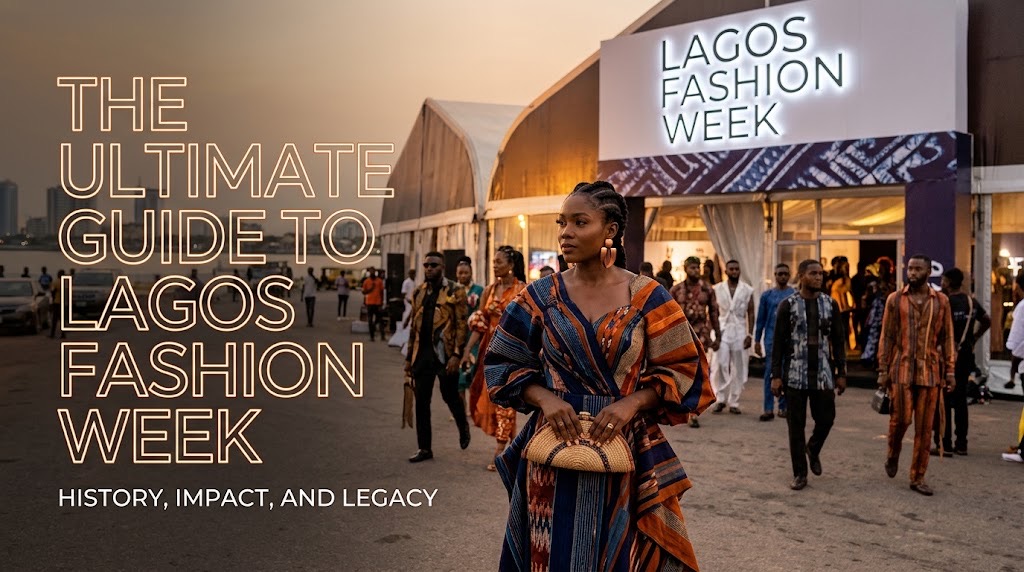
Every October, Victoria Island undergoes a distinct, visceral transformation. As humid Atlantic breezes sweep across the Lagos coast, sprawling tents rise against the skyline, bass-heavy Afrobeat tracks reverberate through late-night soundchecks, and the continent’s most daring style architects gather under the runway lights. What takes place during this four-day summit is far more than an exhibition of seasonal garments—it is a bold assertion of economic sovereignty and cultural autonomy.
Since its inception in 2011, Lagos Fashion Week (LagosFW) has evolved from an ambitious local showcase into the undisputed engine of African luxury fashion. By reimagining how fashion platforms operate in emerging markets, LagosFW has fundamentally restructured how global retail networks, fashion capitals, and luxury conglomerates view African textiles, silhouettes, and manufacturing potential.
The Origin: Dismantling the Colonial Lens
To understand why Lagos Fashion Week matters, one must first examine the historical state of African fashion on the global stage. For decades, international media and European luxury houses approached West Africa through a lens of extraction. Heritage textiles—from the intricate geometric weaves of Yoruba Aso-Oke to the resist-dye art of Adire—were routinely mined as seasonal “trends” or mood board inspirations on Western catwalks, rarely accompanied by credit, economic compensation, or collaboration.
At the same time, homegrown African designers faced severe institutional friction. While talent was abundant across West Africa and its diaspora, local creatives lacked access to critical infrastructure: commercial textile mills, formal retail buyer networks, wholesale distribution channels, and structured venture capital.
Omoyemi Akerele and the Vision of Infrastructure
Enter Omoyemi Akerele. A former corporate lawyer who transitioned into fashion publishing as the founding editor of True Love West Africa, Akerele observed firsthand that the primary hurdle facing African designers was not artistic capability, but system architecture.
In 2011, through her executive strategy agency, Style House Files, Akerele launched Lagos Fashion Week.From day one, the objective was explicit: LagosFW was not designed to mimic Paris, Milan, or New York.Instead, it was built as a commercial trade engine tailored to solve the unique structural challenges of the African creative economy.
Rather than focusing solely on glitz and VIP guest lists, the initiative focused on building a self-sustaining value chain—connecting cotton farmers, rural handloom weavers, patternmakers, and modern tailors with international fashion buyers and venture capital.
Architectural Growth: Key Milestones
The expansion of Lagos Fashion Week mirrors the economic and creative maturation of the African continent over the past decade and a half.
- 2011 – The Inaugural Platform: The first edition of LagosFW established a unified, professional runway format in Nigeria. For the first time, independent West African designers presented structured spring/summer and autumn/winter collections under standardized lighting, production, and media coverage, drawing international editors and retail scouts directly to Lagos.
- 2014 – Launch of Fashion Focus Africa: Recognizing that creative talent requires business acumen to survive, Style House Files launched Fashion Focus Africa. This business incubator provided selected early-stage designers with long-term mentorship, supply chain strategy workshops, production grants, and placement in global showrooms.
- 2018 – The Green Access Initiative: Long before global fashion conglomerates turned “sustainability” into a corporate buzzword, LagosFW integrated local circular economics into its core platform through Green Access. This initiative mandates talent discovery with strict parameters: zero-waste cutting methods, localized sourcing, natural plant dyes, and ethical labor practices.
- 2020 – Woven Threads: At the height of global supply chain disruptions, LagosFW introduced Woven Threads, a dedicated digital and physical platform celebrating the preservation of traditional craft. Woven Threads highlights textile innovation, artisanal weaving communities, and closed-loop manufacturing,proving that African fashion has historically operated on sustainable, ancestral principles.
- 2022 and Beyond – International Museum Integration and Global Validation: By the mid-2020s, the influence of LagosFW had reached the world’s most prestigious cultural institutions. Collections pioneered on the Lagos runway became central features of major global retrospectives, such as the Victoria & Albert Museum’s acclaimed Africa Fashion exhibition in London, cementing Lagos as a permanent pillar of global fashion history.
The Creative Mavericks: Transforming West African Aesthetics
Lagos Fashion Week has served as the launchpad for a generation of designers who have altered the trajectory of modern luxury. Rather than relying on generic Western tailoring, these pioneers look inward,translating heritage customs into contemporary visual narratives.
Standout Designers and Innovations
- Orange Culture (Adebayo Oke-Lawal): Pioneered androgynous menswear challenging rigid gender norms through silk, print, and local tailoring. LVMH Prize nominee stocked internationally at Farfetch and Browns.
- Lisa Folawiyo: Modernized traditional Ankara wax prints with intricate hand-embellished beadwork and sequins, earning features in global publications and placements in luxury retailers like Moda Operandi and Selfridges.
- Nkwo (Nkwo Onwuka): Developed Dakala Cloth, an innovative waste-reduction textile crafted entirely from upcycled cotton scraps, earning international accolades for sustainable design.
- Iamisigo (Bubu Ogisi): Transforms wearable fiber art into an exploration of ancestral textile preservation across West and East Africa, exhibiting regularly in global galleries and design biennales.
- Tokyo James: Merges avant-garde menswear with British Savile Row tailoring and Lagos energy,showcasing regularly at international shows including Milan Fashion Week.
Breaking the Ankara Stereotype
For decades, global media reduced African fashion to a single textile: factory-printed Ankara cloth. LagosFW played a pivotal role in broadening this narrative. Designers showcased on the Lagos stage introduced the world to an intricate tapestry of indigenous textiles:
- Aso-Oke: A hand-woven cloth created by the Yoruba people, traditionally made from raw silk and cotton,now reinterpreted into modern sharp suiting and eveningwear.
- Adire: Indigo-dyed resist textiles from Southwestern Nigeria, updated through modern graphic techniques and organic dyes.
- Akwete: An intricate geometric handloom fabric native to Abia State in Southeastern Nigeria, championed for its rich structural weight.
- Tiv Anger Fabric: Black-and-white striped woven textile from Benue State, incorporated into contemporary streetwear and outerwear.
Economic Impact: Beyond the Catwalk
While the runway spectacle generates millions of impressions across social media, the primary engine of Lagos Fashion Week operates behind the scenes in economic development, job creation, and export expansion.
1. Re-engineering Local Manufacturing
Before LagosFW, many local fashion brands functioned as bespoke tailoring houses with limited scaling capacity. The platform incentivized designers to shift toward standardized sizing, industrial production runs,and commercial garment factories. This shift has driven private investment into apparel manufacturing hubs across Nigeria, creating thousands of skilled jobs in patternmaking, garment assembly, quality control, and logistics.
2. Sustaining Rural Artisanal Communities
By prioritizing hand-woven textiles over cheap imported synthetics, LagosFW designers provide direct,sustainable income to thousands of rural weavers, dyers, and artisans—a majority of whom are women. This artisan-designer pipeline prevents ancient craft techniques from dying out while delivering economic empowerment directly to local communities.
3. Capital Inflow and E-Commerce Integration
The success of LagosFW attracted global e-commerce platforms like Net-a-Porter, SSENSE, and MatchesFashion to West Africa. Local designers are no longer restricted to selling at pop-up markets; they operate multi-channel digital enterprises exporting luxury garments to buyers in London, New York, Tokyo, and Paris.
The Sustainable Model: Ancestral Practices as the Future
In recent years, the global fashion industry has faced severe scrutiny over fast-fashion waste, excessive water consumption, and unmanageable supply chains. In contrast, Lagos Fashion Week has demonstrated that African fashion has always been inherently sustainable.
Long before Western fashion capitals began pushing circular fashion targets, African textile production depended on hyper-local supply chains. Cotton was grown, spun, dyed with native indigo plants, and hand-woven within small regional radiuses. Garments were designed to be durable, passed down through generations, and repurposed over time.
Through initiatives like Woven Threads and Green Access, LagosFW reinforces these ancestral methods as modern solutions for a struggling planet. Designers on the Lagos runway regularly present zero-waste cutting patterns, upcycled deadstock garments, and natural plant-based dyes, setting a global standard for responsible luxury.
Challenges and the Horizon
Despite its monumental success, Lagos Fashion Week operates within a complex macroeconomic environment. The platform and its designers continue to navigate persistent structural obstacles:
- Infrastructure Gaps: Unstable electricity grids and high transport costs increase production expenses for local garment factories.
- Raw Material Access: While West Africa produces high volumes of raw cotton, a shortage of processing mills means raw fiber is often exported and re-imported as finished fabric.
- Access to Trade Capital: High interest rates and limited fashion-specific investment funds can make scaling production difficult for young designers.
Yet, it is precisely this environment that makes the resilience of LagosFW so compelling. Style House Files continues to lobby for regional trade policy reform, work alongside international trade organizations, and build strategic partnerships to address these systemic gaps.
The Legacy: A Blueprint for Cultural Autonomy
Lagos Fashion Week has achieved something far greater than putting Nigerian designers on global runways: it has completely rewritten the narrative of African fashion.
African fashion is no longer treated as a niche subgenre or a seasonal trend to be harvested by foreign design studios. It stands as a vibrant, self-sustaining ecosystem built on deep ancestral heritage, economic resilience,and unyielding creative innovation.
Every October, when the lights hit the Lagos runway, the message is unmistakable: Lagos is not waiting for permission or validation from external fashion capitals. The future of global luxury fashion is actively being forged right here on the West African coast.

Add Comment