
Search
Add Listing Sign In

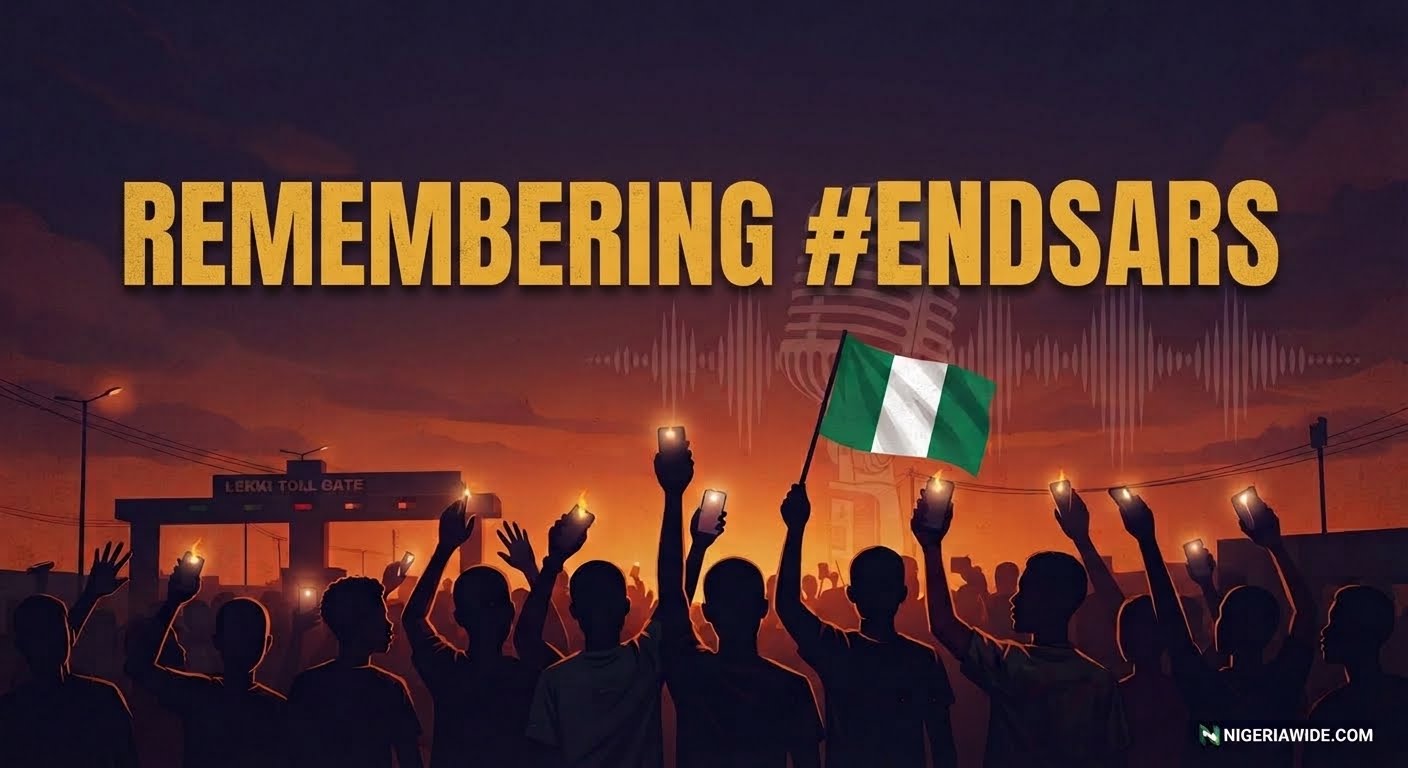
Remembering #EndSARS: 10 Musical Tributes Honoring the Fight Against Police Brutality

ADVERTISEMENT
Every year, the echo of October 20, 2020, reverberates across Africa. What began as a unified, youth-led cry to dismantle the Special Anti-Robbery Squad (SARS) transformed into a historical milestone of collective resistance. At the very heart of the #EndSARS movement in Nigeria was music—a powerful instrument used to unify voices, document trauma, and preserve the memories of those who fell at the Lekki Toll Gate.
 
As a national platform dedicated to uncovering insights and local culture, We explore how creatives transformed collective grief into an unyielding call for accountability. These 10 monumental musical tributes capture the spirit, pain, and courage of a generation fighting against police brutality and systemic injustice throughout Nigeria.
 

The History and Sound of October 20, 2020, in Nigeria

Music has always been intertwined with social justice across the country. During the protests, streaming platforms and street speakers became modern-day podiums. When the tragic events of October 20 unfolded, musicians in Nigeria didn’t just offer condolences; they used their global platforms to record history in real time, ensuring that the stories of the victims would never be erased by official denials.

10 Iconic Musical Tributes of the #EndSARS Era in Nigeria

 
1. “20:10:20” – Burna Boy

Released shortly after the tragedies of October 20, Burna Boy’s “20:10:20” acts as an audio documentary of the Lekki Toll Gate incident. Sampling direct audio elements from the chaotic live streams of that night in Nigeria, the track strips away standard Afrobeats dance rhythms, replacing them with raw heartbreak and direct political indictments.

ADVERTISEMENT
2. “20.10.20 (Wahala Dey)” – Chike

Known for his emotive vocals, Chike delivered a deeply moving perspective with “20.10.20 (Wahala Dey)”. The acoustic-driven ballad focuses on the human cost of the struggle, mourning the bright futures cut short while echoing the ongoing anxiety felt by youth walking the streets.

3. “Barawo” – Ajebo Hustlers (ft. Davido)

Even before the protests reached their peak in October, Ajebo Hustlers’ “Barawo” had already become a street anthem against extrajudicial killings and jungle justice. The subsequent remix featuring Davido amplified its anti-corruption message across Nigeria and the continent, capturing the systemic issues that birthed the protests.

4. “FEM” – Davido

Though originally written as a personal message to his detractors, Davido’s “FEM” unexpectedly became the defining anthem of defiance on protest grounds across Nigeria. Protesters famously used the track to drown out government officials trying to give speeches, transforming a club hit into a symbolic tool used to silence political rhetoric.

5. “This Is Nigeria” – Falz

While released a couple of years before the climax of the movement, Falz’s “This Is Nigeria” laid down the foundational critique of SARS brutality and systemic institutional failure. His consistent activist discography remained a soundtrack of education and mobilization throughout the demonstrations across Nigeria.


6. “ENDSARS” – FIKKY

ADVERTISEMENT
Direct, unvarnished, and born straight out of the internet-driven underground uprising, FIKKY’s “ENDSARS” served as a rallying cry on social media timelines and physical roadblocks alike, demanding immediate accountability for the youth of Nigeria.

7. “This Fight” – Dwin, The Stoic

A somber yet resilient composition, “This Fight” by Dwin, The Stoic moves past immediate anger to address the marathon nature of advocacy. It functions as a gentle tribute to the internal strength required to sustain the demand for a better Nigeria.

8. “Jailer” – Asa

As custom during the rallies, historical conscious classics were re-introduced to a younger generation. Asa’s timeless “Jailer” was widely played across protest grounds, highlighting the cyclical irony of the oppressor also being trapped within the broken system they guard.

9. “Sorrow, Tears and Blood” – Fela Kuti

No compilation of activist music in Nigeria is complete without the Afrobeat pioneer. Fela Kuti’s “Sorrow, Tears and Blood” proved heartbreakingly prophetic decades later, serving as a reminder that the struggle against military-style law enforcement tactics is deeply rooted in history.

10. “Jaga Jaga” – Eedris Abdulkareem

Another generational classic that enjoyed a massive resurgence, Eedris Abdulkareem’s “Jaga Jaga” starkly illustrated that the socio-economic conditions and institutional decay critiqued in the early 2000s still mirror modern realities in Nigeria.

ADVERTISEMENT

How Activist Music Keeps the Fight for Justice Alive in Nigeria

Documenting local culture means capturing both the nation’s celebrations and its deepest struggles. The songs generated and revived during the #EndSARS movement are more than just streaming entries—they are a permanent record of a shared national history.
 
By keeping these melodies alive, the conversation around accountability, judicial reform, and human rights in Nigeria remains active. Music continues to prove that even when protests clear from the streets, the voice of the people can never truly be silenced.

Prev Post
Dave Live in Lagos: Everything That Happened at the Wole Soyinka Centre Concert

Add Comment

Your email is safe with us.

Advertisements

ADVERTISEMENT